Fertilizing Fig Trees in Containers: Timing, Rates, and Common Mistakes
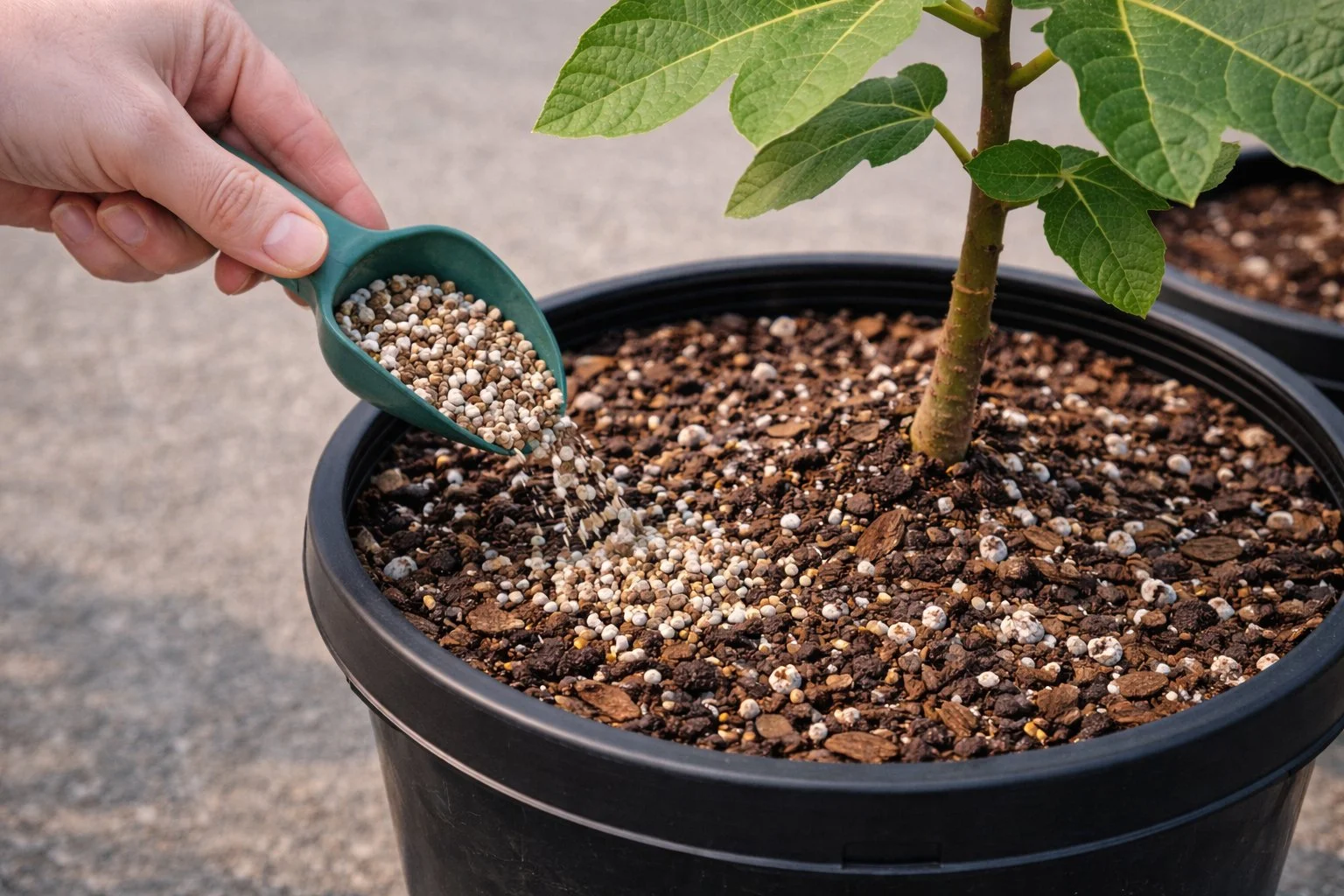
Fertilization plays a different role in container-grown figs than it does in the ground. In containers, nutrients are not buffered by surrounding soil, nor are they replenished naturally by biological processes at the same scale. Everything the tree receives is either added intentionally or depleted through growth and watering. For this reason, fertilization must be approached as a measured, seasonal practice rather than a routine habit.
Many container fig problems attributed to poor soil or weak varieties are, in reality, the result of mistimed or excessive feeding.
Why Containers Require a Different Fertilization Mindset
In-ground fig trees can tolerate broad feeding ranges because excess nutrients disperse through the soil profile. Containers concentrate whatever is applied. Nutrients that are not taken up by the roots remain in the pot, where they accumulate as salts and alter the root environment.
This concentration effect means that container figs respond quickly—both positively and negatively—to fertilization. When nutrients are supplied at the right time and in appropriate amounts, growth is steady and controlled. When feeding is excessive or poorly timed, stress appears rapidly, often in subtle ways that worsen over time.
Timing Matters More Than Fertilizer Choice
The most important fertilization decision is when to feed, not what to use. Container figs benefit from nutrients during periods of active growth, particularly in spring and early summer when roots, shoots, and fruiting wood are developing.
As the season progresses, nutrient demand changes. Continued heavy feeding late in summer encourages soft, vegetative growth that is slow to mature and vulnerable to stress. In cooler climates, this late growth often fails to harden properly, increasing the risk of winter damage and dieback.
Reducing or stopping fertilization as growth naturally slows allows the tree to transition toward dormancy without interruption.
Moderation and Consistency Over Strength
Strong, infrequent doses of fertilizer create sharp spikes in nutrient availability that container figs do not need. These spikes can push rapid shoot growth at the expense of fruit development and root health. More often, they lead to salt buildup that interferes with water uptake, even when soil moisture appears adequate.
Moderate, consistent feeding supports balanced growth. Whether using organic or synthetic sources, smaller amounts applied thoughtfully produce more reliable results than aggressive feeding schedules.
Understanding Salt Buildup in Containers
Salt accumulation is one of the most overlooked issues in container fig care. Each fertilization adds soluble salts to the soil, and without sufficient flushing, those salts remain behind as water evaporates or is absorbed by the tree.
Over time, elevated salt levels damage fine roots and reduce the tree’s ability to absorb water. Symptoms often resemble drought stress or nutrient deficiency, leading growers to apply more fertilizer and compound the problem. Recognizing this pattern early prevents long-term decline.
Organic and Synthetic Fertilizers in Context
Both organic and synthetic fertilizers can be used successfully in containers when applied correctly. Organic sources tend to release nutrients more slowly and are less likely to cause sudden spikes, but they still contribute to salt levels over time. Synthetic fertilizers offer precision and predictability but require careful dilution and timing.
The choice between them is less important than understanding their behavior in a confined soil system. In containers, no fertilizer is inherently forgiving when misused.
Adjusting Feeding as Trees Mature
Young container figs require modest nutrition while establishing roots and structure. As trees mature and begin consistent fruiting, nutrient demand increases slightly but remains finite. Feeding should support fruit development without driving excessive vegetative growth.
A mature container fig that maintains healthy leaf color, steady growth, and reliable fruiting does not benefit from escalating fertilizer rates. Stability, not intensity, is the goal.
Fertilization as Part of a Larger System
Fertilization does not operate in isolation. Its effects are shaped by soil structure, watering practices, container size, and seasonal conditions. When these factors are aligned, fertilization becomes a supporting tool rather than a corrective measure.
Container figs respond best when nutrients are supplied thoughtfully, adjusted seasonally, and allowed to complement the tree’s natural growth rhythm.
For a broader framework that places fertilization in context, refer back to Growing Fig Trees in Containers. The next supporting article will explore pruning and size control for container-grown fig trees, focusing on maintaining structure without sacrificing productivity.
