Drainage, Pot Feet, and Elevation: Preventing Root Rot in Container Figs
When container figs fail, the cause is rarely fertilizer or sunlight. Far more often, the problem starts at the bottom of the pot. Poor drainage and improper container elevation are silent killers that slowly suffocate roots, invite disease, and undermine even well-managed fig trees.
This article explains how drainage really works in container figs, why pot elevation matters more than most growers realize, and how small adjustments can dramatically improve long-term tree health.
Why Drainage Is Critical for Container Figs
Fig roots require oxygen as much as they require water. In containers, excess moisture has nowhere to escape unless drainage is intentionally designed into the system. When water pools at the base of a pot, roots sit in low-oxygen conditions, leading to root rot, nutrient uptake failure, and eventual canopy decline.
Unlike in-ground figs, container figs cannot self-correct drainage problems. If the pot stays wet, the roots stay stressed.
Drainage Holes: More Is Better Than Bigger
A common mistake is relying on one or two large drainage holes. While large holes help, multiple evenly spaced drainage holes are far more effective at preventing water accumulation.
Good drainage allows water to exit quickly while still retaining moisture within the soil structure. Containers should never trap standing water at the bottom after irrigation.
If water drains slowly or inconsistently, the issue is often not the soil mix alone but insufficient or poorly placed drainage openings.
The Hidden Problem of Flat-Ground Containers
Even well-drilled pots can fail if they sit flat on solid surfaces. When containers rest directly on concrete, compacted soil, or deck boards, drainage holes can become partially or fully blocked.
This creates a false bottom where water collects unnoticed. Over time, roots grow downward into this wet zone and begin to rot, even while the upper soil appears dry and healthy.
Why Elevation Changes Everything
Elevating container figs slightly off the ground allows gravity to work as intended. Air can enter from below, excess water exits freely, and root oxygen levels remain stable.
Even an inch of lift can significantly reduce moisture-related stress. Elevation also improves temperature moderation at the base of the pot, which helps protect roots during both summer heat and cool, wet conditions.
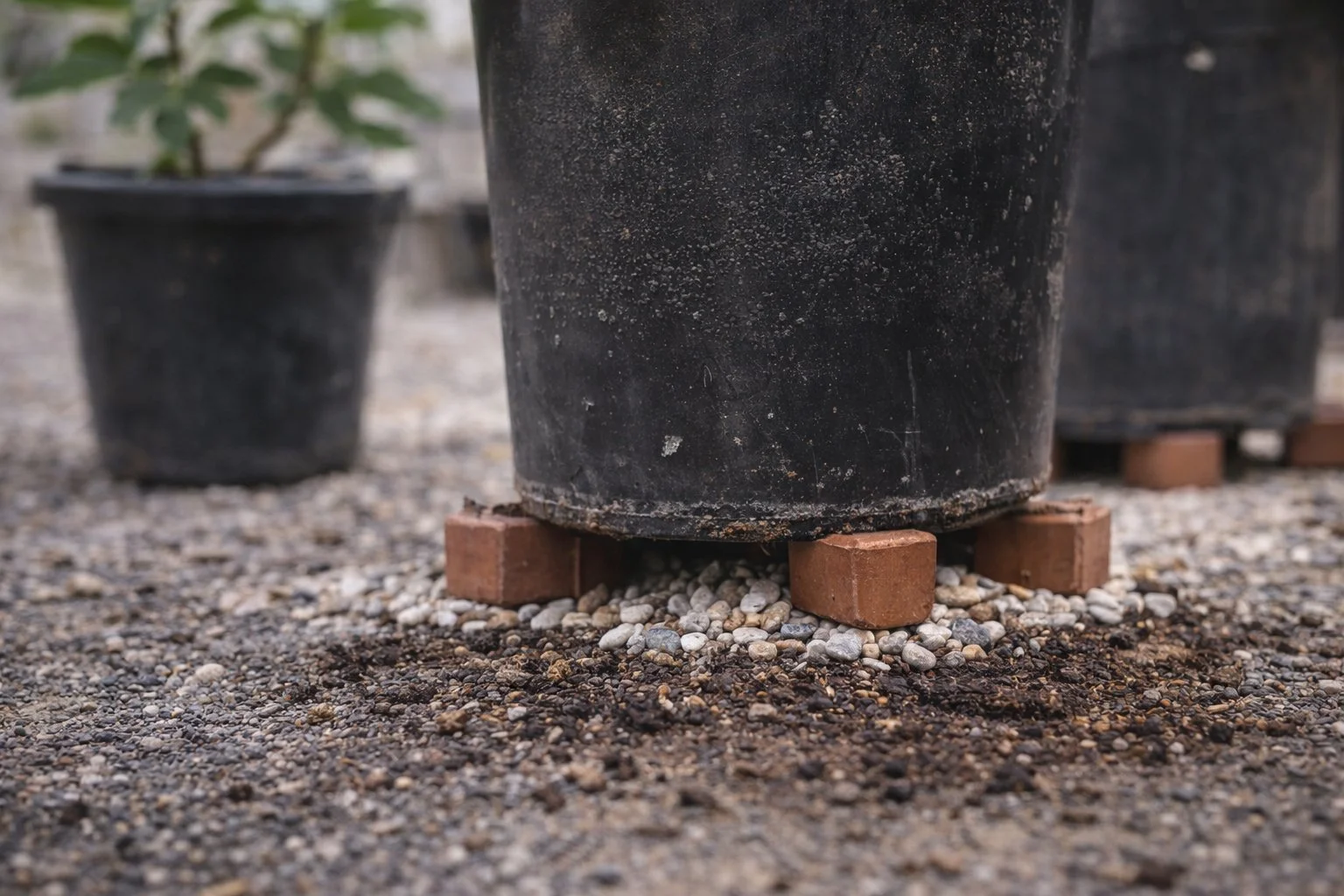
Pot Feet, Bricks, and Stands: What Works Best
Pot feet are an excellent solution for most container figs. They provide consistent spacing, distribute weight evenly, and allow airflow without destabilizing the pot.
Bricks, pavers, or treated wood blocks also work well, especially for large or heavy containers. The key is stability combined with open airflow beneath the drainage holes.
Avoid narrow supports that concentrate weight unevenly or allow the pot to tilt as soil settles.
Drainage Layers: Helpful or Harmful?
Adding gravel or rocks to the bottom of a container is often thought to improve drainage, but in reality, it can create a perched water table, trapping moisture above the layer rather than allowing it to escape.
Proper drainage is achieved through container design, elevation, and soil structure, not by layering materials at the bottom. A uniform, well-draining soil mix performs far better than layered containers.
How Drainage Affects Fertilization and Watering
Poor drainage masks itself as nutrient deficiency or inconsistent watering needs. Roots damaged by excess moisture cannot absorb nutrients efficiently, leading growers to overfertilize or overwater in response.
Once drainage and elevation are corrected, watering schedules become more predictable and nutrient uptake improves without increasing inputs.
The Takeaway
Healthy container figs start from the bottom up. Adequate drainage and proper pot elevation are non-negotiable for long-term success. By ensuring water can exit freely and air can enter from below, you eliminate one of the most common causes of container fig decline — often without changing anything else in your system.
For a complete, season-by-season framework that ties soil, watering, pruning, winter protection, and variety choice together, see Growing Fig Trees in Containers.
