Overwatering vs Underwatering: How to Tell the Difference in Fig Trees
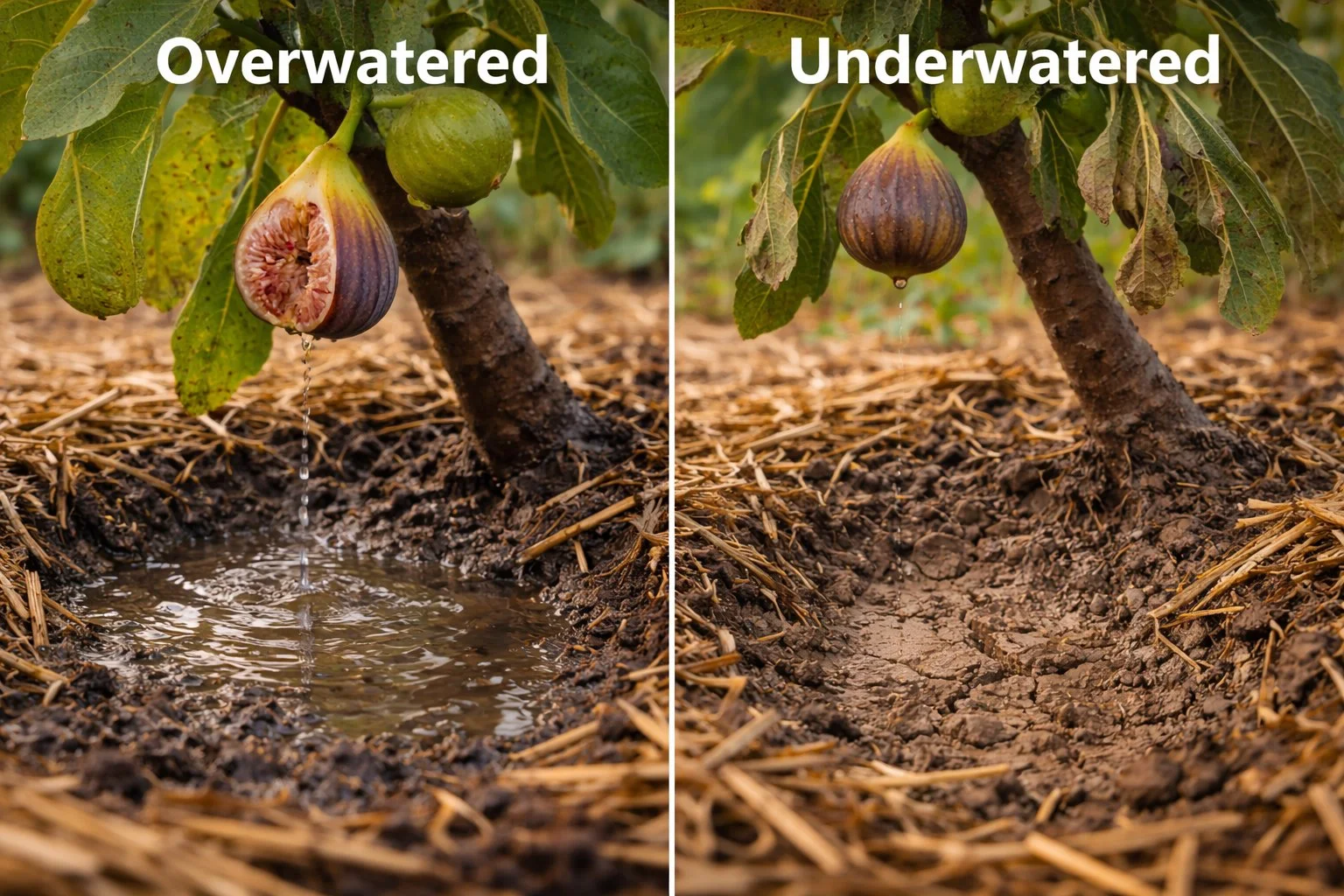
Few problems cause more confusion for fig growers than determining whether a tree is receiving too much water or too little. The symptoms can look deceptively similar at first glance, yet the corrective actions are very different. Misreading these signals often leads growers to make the problem worse—watering more when roots are already stressed, or withholding water when the tree is already dehydrated.
In Zone 7b, where rainfall can swing rapidly from excess to deficit, learning to distinguish overwatering from underwatering is an essential skill. Fig trees are resilient, but they respond quickly to root stress, and the signals they send are consistent once you know how to interpret them.
Why Water Stress Looks Similar at First
Both overwatering and underwatering interfere with the root system’s ability to function properly. Roots need oxygen as much as they need moisture. When soil is too dry, roots cannot absorb water or nutrients. When soil is too wet, oxygen is displaced and roots suffocate.
In both cases, the tree experiences internal stress, and the earliest above-ground symptoms—wilting, slowed growth, or leaf drop—may look nearly identical. The key to accurate diagnosis lies in timing, soil conditions, and the pattern of symptoms rather than a single visual cue.
Signs of Underwatering in Fig Trees
Underwatered fig trees typically show stress during the warmest part of the day. Leaves may droop or lose firmness in the afternoon, then partially recover overnight. New growth slows, internodes shorten, and leaves may appear smaller than normal.
In container-grown figs, the potting mix often dries rapidly and may pull away from the sides of the container. Fruit drop is common when moisture becomes insufficient during fruit development, and remaining fruit may stay small or fail to ripen evenly.
Prolonged underwatering leads to chronic stress. Leaves may yellow and drop prematurely, growth stalls, and the tree prioritizes survival over fruit production. While figs tolerate drought better than many fruit trees, extended dryness during active growth always reduces performance.
Signs of Overwatering in Fig Trees
Overwatering creates a very different root environment, even though early symptoms may overlap. Leaves on overwatered figs often appear dull, limp, or soft rather than crisp. Wilting may persist throughout the day and does not improve overnight.
Soil or potting mix remains consistently wet and may develop a sour or stagnant smell. Fungus gnats are frequently present in containers where moisture remains excessive. New growth may appear weak or pale, and leaves can yellow even though water is abundant.
In advanced cases, root damage leads to leaf drop, stalled growth, and eventual dieback. Unlike underwatering, which can be corrected quickly, overwatering often causes root injury that takes weeks to repair.
Using Soil Conditions to Diagnose the Problem
Soil moisture is the most reliable diagnostic tool. In containers, lifting the pot provides immediate feedback. A pot that remains heavy long after watering indicates excess moisture, while one that becomes very light within hours suggests rapid drying.
In-ground trees require deeper assessment. Soil should be checked several inches below the surface. Dry soil at depth indicates the need for irrigation, while cool, wet soil days after rainfall or watering suggests poor drainage or excessive irrigation.
The goal is moist—not saturated—soil that gradually dries between waterings.
How Watering Patterns Create the Problem
Many watering issues arise not from total water volume but from timing and frequency. Frequent shallow watering encourages roots to remain near the surface, making trees more vulnerable to heat stress and drought. In contrast, infrequent deep watering promotes deeper root systems and greater resilience.
Overwatering often results from watering on a schedule rather than in response to actual soil conditions. Automatic systems that run too frequently can create chronic saturation even when trees need less water.
Understanding how and when water is applied is just as important as how much.
Correcting Underwatering Without Creating New Problems
When a fig tree is underwatered, the solution is not simply to add more water once. Instead, irrigation should be adjusted to deliver deeper, more consistent moisture. For containers, this may mean increasing watering frequency during hot weather while ensuring full saturation each time.
For in-ground trees, deep soaking encourages roots to access moisture at greater depths. Mulching further stabilizes soil moisture and reduces evaporation, making irrigation more effective.
Gradual correction avoids shocking the tree and reduces the risk of fruit splitting caused by sudden moisture changes.
Correcting Overwatering and Supporting Root Recovery
Correcting overwatering requires patience. The first step is allowing soil to dry sufficiently to restore oxygen to the root zone. In containers, improving drainage, reducing watering frequency, and ensuring excess water can escape freely are critical.
In-ground trees suffering from excess moisture may benefit from improved drainage, reduced irrigation frequency, and careful monitoring of rainfall patterns. Damaged roots require time to regenerate, and growth may remain slow for several weeks even after conditions improve.
Resisting the urge to overcorrect is essential. Adding more water to a stressed root system almost always worsens the situation.
Why Diagnosis Matters for Long-Term Fig Health
Repeated cycles of overwatering and underwatering weaken fig trees over time. Roots become less efficient, growth becomes irregular, and fruit quality declines. Accurate diagnosis allows growers to intervene early, maintaining stable conditions that support consistent growth and reliable fruiting.
Once water stress patterns are understood, irrigation becomes a preventive practice rather than a reaction to visible problems.
Related Guides in This Series
For a full overview of fig watering principles, see Irrigation & Water Management for Figs. You may also find these guides helpful:
