Mulching for Moisture Retention in Fig Orchards and Containers
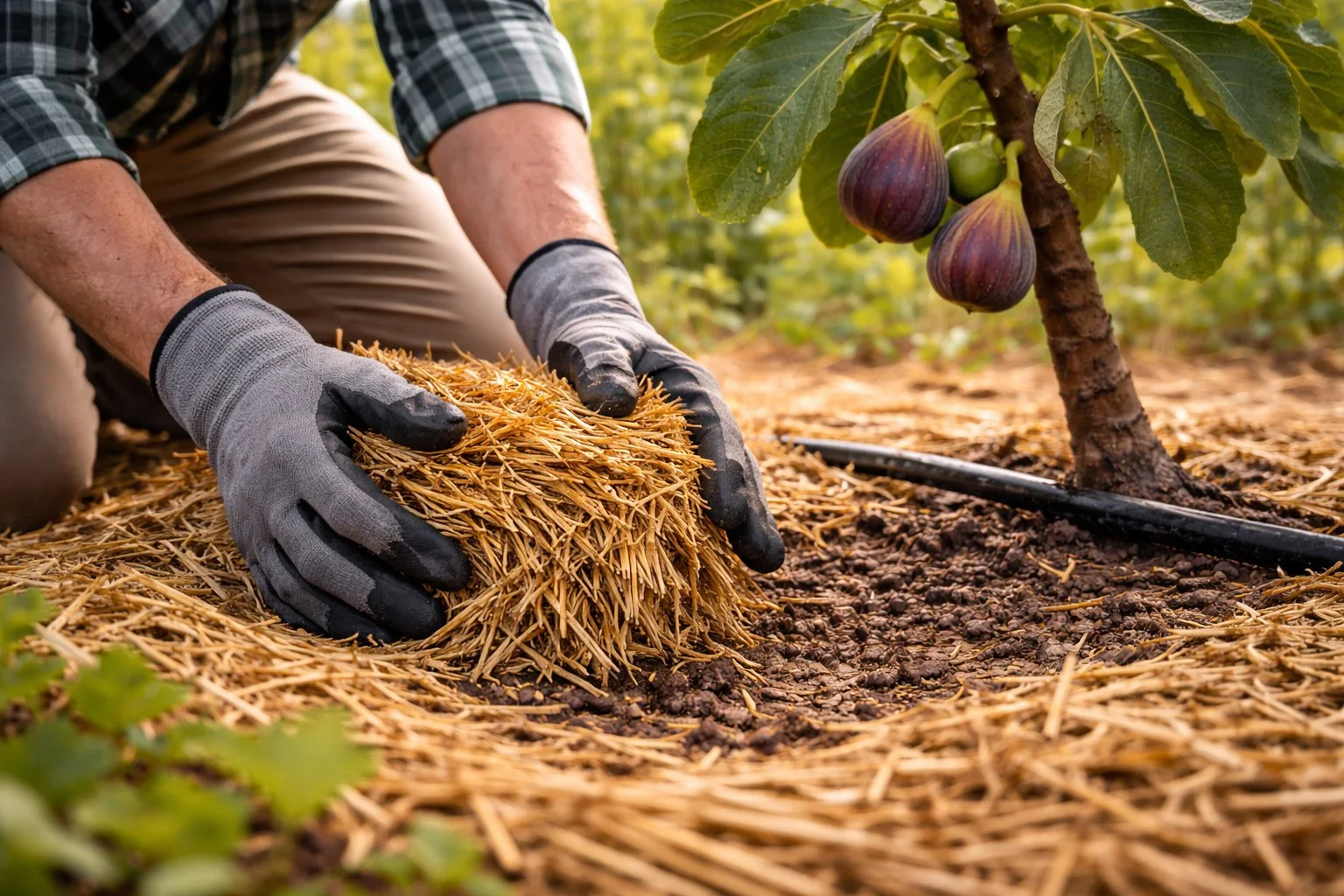
Mulching is one of the most effective yet underestimated tools for managing water in fig production. While irrigation delivers moisture to the root zone, mulch determines how long that moisture remains available. In Zone 7b, where heat, wind, and variable rainfall quickly strip water from exposed soil, mulching often makes the difference between stable growth and chronic stress.
Proper mulching reduces irrigation demand, moderates soil temperature, protects roots, and stabilizes moisture levels throughout the growing season. Its impact extends beyond water conservation, influencing root health, fruit quality, and long-term tree resilience.
How Mulch Conserves Soil Moisture
Mulch acts as a physical barrier between the soil surface and the atmosphere. By shading the soil, it reduces evaporation caused by sun and wind. It also slows the rate at which soil heats up during the day and cools at night, creating a more stable root-zone environment.
When irrigation or rainfall occurs, mulch allows water to infiltrate evenly rather than running off or evaporating quickly. This steady infiltration supports deeper root hydration and reduces the sharp moisture swings that contribute to fruit drop and splitting.
Mulching In-Ground Fig Trees
In-ground figs benefit greatly from consistent mulching, especially during summer heat. A thick layer of organic material—such as wood chips, shredded leaves, or bark—helps retain moisture in the upper soil layers while encouraging roots to grow deeper.
Mulch should be applied broadly, extending well beyond the trunk to cover the active root zone. Keeping mulch a few inches away from the trunk prevents moisture buildup against the bark and reduces the risk of rot. When applied correctly, mulch reduces irrigation frequency and improves water-use efficiency throughout the orchard.
Mulching Container-Grown Fig Trees
Container figs experience rapid moisture loss due to limited soil volume and heat absorption through container walls. Mulching the soil surface of containers helps slow evaporation and moderates temperature fluctuations within the pot.
Organic mulches such as bark or wood chips are well suited for containers. They allow airflow while reducing surface drying. Even a modest layer can significantly extend the time between waterings during hot weather.
Mulch does not replace watering for containers, but it makes irrigation more forgiving and reduces the risk of sudden drought stress.
Choosing the Right Mulch Materials
Organic mulches are generally preferred for figs. Wood chips, shredded bark, and leaf mulch decompose slowly, improving soil structure over time. As they break down, they increase organic matter and enhance moisture-holding capacity.
Fine-textured mulches break down faster and may require more frequent replenishment. Coarse mulches last longer but should still allow water to penetrate easily. Avoid impermeable materials that shed water or prevent oxygen from reaching the soil.
How Mulch Improves Root Health
Beyond moisture retention, mulch supports root health by maintaining stable oxygen levels and protecting fine feeder roots from extreme temperatures. Roots exposed to repeated drying and heating cycles become less efficient and more prone to damage.
Mulched soils foster a healthier microbial environment, which improves nutrient availability and root function. Over time, this leads to stronger growth, improved fruit quality, and greater stress tolerance.
Mulch and Irrigation Work Together
Mulch does not replace irrigation; it amplifies its effectiveness. Trees with mulched root zones respond more evenly to watering and rainfall, reducing the extremes that cause stress-related problems. Irrigation schedules can often be adjusted downward once mulch is established, conserving water without compromising growth.
Monitoring soil moisture beneath the mulch is important. While the surface may appear dry, soil below often remains adequately moist. Adjusting irrigation based on actual soil conditions prevents overwatering.
Seasonal Mulching Considerations
Mulch is most critical during summer, when evaporation and heat stress peak. Maintaining mulch depth throughout the growing season ensures consistent moisture availability. In fall, mulch continues to moderate soil temperature and supports gradual hardening before winter.
During winter, mulch provides insulation that protects roots from temperature extremes. While water demand is low during dormancy, mulched soils retain moisture longer during dry winter periods.
Common Mulching Mistakes to Avoid
Applying mulch too thinly limits its effectiveness, while piling it directly against the trunk encourages rot and pest issues. Neglecting to replenish decomposed mulch reduces long-term benefits.
Another common mistake is assuming mulch eliminates the need for monitoring soil moisture. While mulch stabilizes conditions, irrigation decisions should still be based on actual root-zone moisture.
Why Mulching Is a Long-Term Investment
Consistent mulching improves water efficiency year after year. Trees grown with stable moisture and protected roots develop stronger structures, experience fewer stress events, and produce more reliable crops. Mulching is not a one-time fix but a foundational practice that supports every other aspect of fig water management.
Related Guides in This Series
Mulching works hand-in-hand with irrigation, as outlined in Irrigation & Water Management for Figs. You may also find these guides helpful:
