Watering Container Figs Without Root Rot or Stress
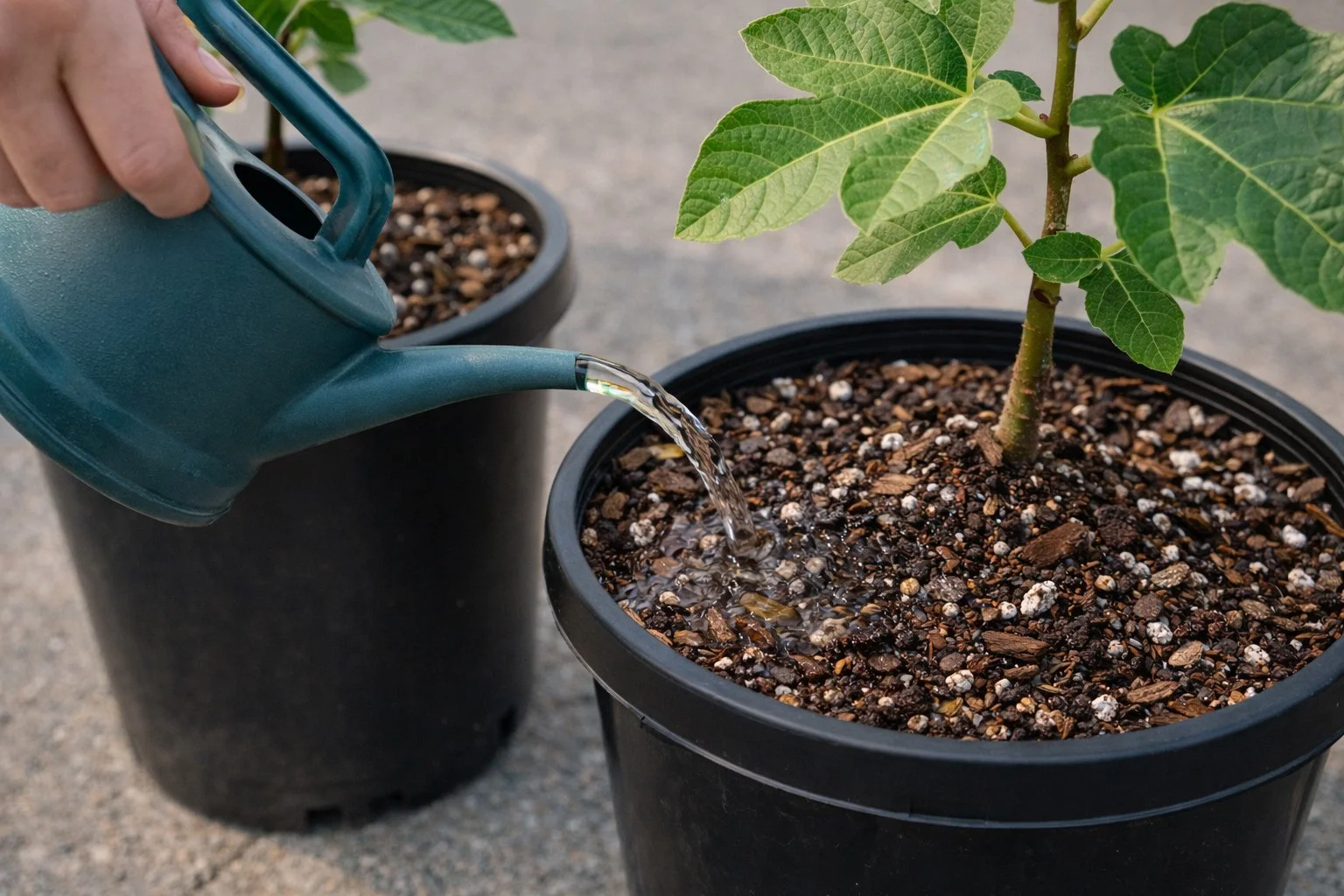
Water management is one of the most misunderstood aspects of growing figs in containers. Many problems attributed to disease, nutrient deficiency, or poor varieties are, in reality, responses to inconsistent moisture in the root zone. Containers amplify both good and bad watering practices. When moisture is managed well, figs respond with steady growth and reliable fruiting. When it is not, stress accumulates quickly.
Successful watering is not about following a schedule. It is about understanding how water moves through a container and how roots respond over time.
Why Containers Change the Rules of Watering
In the ground, excess water can disperse into surrounding soil, and roots can explore wider areas for moisture and oxygen. Containers remove that buffer. The entire root system depends on a finite volume of soil, making both drought and saturation more impactful.
Because container soil warms and cools more rapidly, evaporation rates fluctuate with weather, container size, and exposure. This variability is why rigid watering routines often fail. Instead, consistent observation becomes the most reliable tool.
Moisture Balance and Root Health
Fig roots require moisture and oxygen simultaneously. Root rot does not result from water itself, but from the absence of oxygen when soil remains saturated for extended periods. In containers, this condition develops quickly if drainage is poor or watering is too frequent.
Healthy container soil cycles between moist and lightly drying. This cycle pulls oxygen into the root zone and encourages strong, fibrous root growth. When soil is kept constantly wet, roots weaken, uptake slows, and stress symptoms appear above ground long before rot becomes visible.
Volume Matters More Than Frequency
A common mistake in container watering is focusing on how often water is applied rather than how thoroughly. Light, frequent watering wets only the upper portion of the soil, leaving deeper roots dry and inactive. Over time, this leads to shallow root systems that are more vulnerable to heat and stress.
Proper watering fully saturates the container, allowing water to move through the entire soil profile and exit freely through the drainage holes. This approach encourages roots to occupy the full volume of the pot and promotes more stable moisture conditions between waterings.
Seasonal Shifts in Water Demand
Water needs change throughout the growing season. In spring, container figs require modest but consistent moisture as roots become active and new growth begins. Overwatering at this stage can slow establishment and delay early development.
During summer, demand increases sharply. Larger canopies, active fruiting, and higher temperatures accelerate water loss. Containers may require daily watering during extended heat, particularly in full sun or wind-exposed locations. The key is maintaining even moisture without allowing the soil to remain saturated.
As growth slows in late summer and fall, water requirements decrease. Reducing irrigation gradually helps prepare the tree for dormancy and prevents soft, late-season growth that is more susceptible to cold damage.
Recognizing Early Signs of Water Stress
Container figs often signal moisture problems before irreversible damage occurs. Wilting during the heat of the day that resolves by evening typically indicates temporary water deficit rather than root failure. Persistent wilting, yellowing leaves, or sudden leaf drop suggest deeper issues related to prolonged stress or poor root function.
Learning to interpret these signals allows growers to adjust practices proactively rather than react after decline sets in.
Container Size, Material, and Placement Effects
Smaller containers dry more quickly and require closer attention, while larger containers provide greater moisture stability. Container material also influences evaporation and heat absorption. Placement in full sun, against reflective surfaces, or in windy areas increases water loss and should be factored into watering decisions.
These variables reinforce the need for flexibility. Watering practices that work in one location or season may need adjustment in another.
Watering as a Managed System
Effective watering is not an isolated task. It works in concert with soil structure, container choice, pruning, and fertilization. When these elements are aligned, container figs become more forgiving and resilient.
By focusing on thorough watering, allowing appropriate drying between applications, and adjusting to seasonal conditions, growers can prevent root rot and reduce stress without constant intervention.
For a broader framework that connects watering to container choice, soil structure, and seasonal care, refer back to Growing Fig Trees in Containers. The next supporting article will examine fertilizing fig trees in containers, with particular attention to timing and avoiding salt-related stress.
