Managing Heat Stress in Container Fig Trees
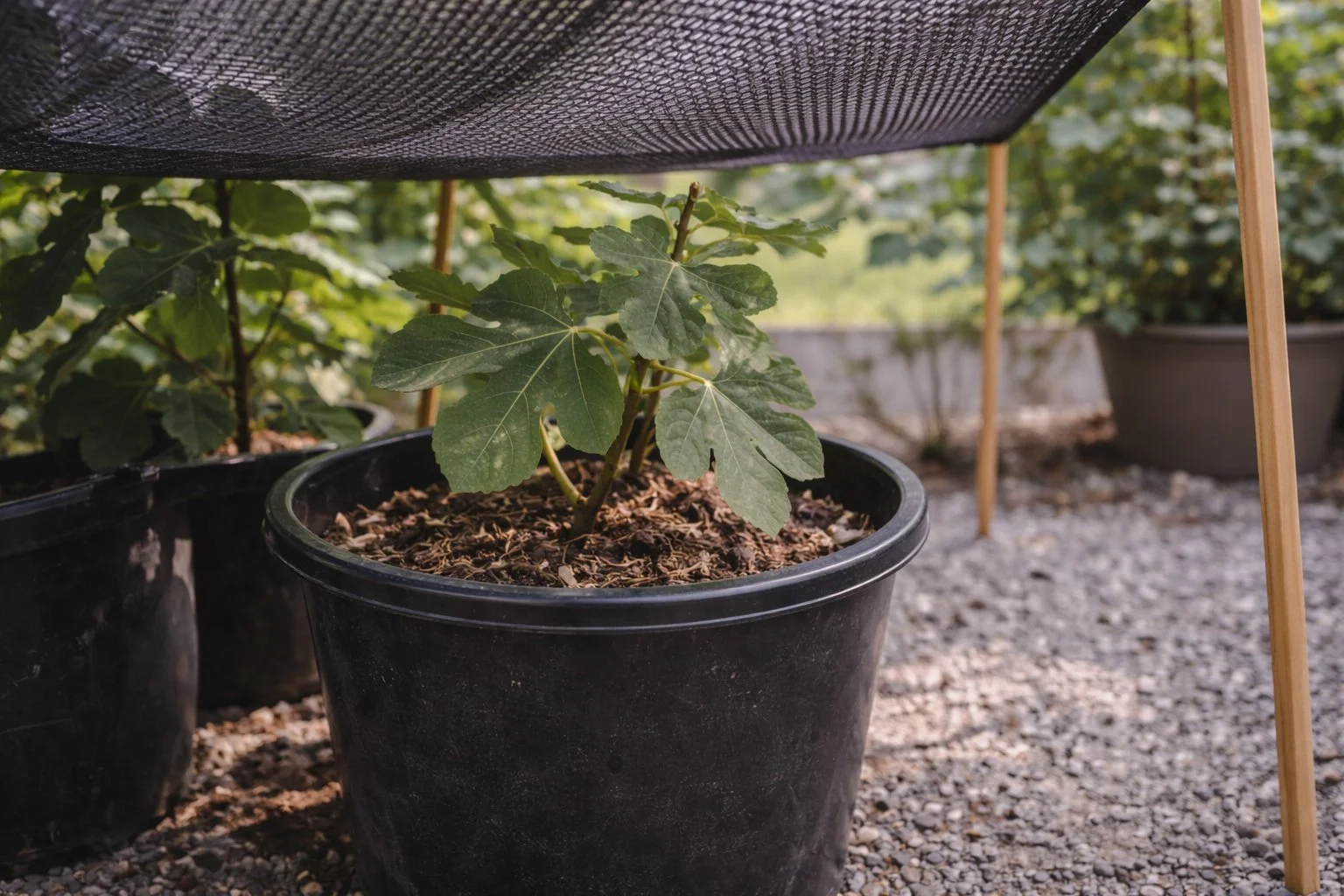
Container figs thrive on warmth, but excessive heat can quietly undermine growth, fruit quality, and long-term health. Unlike in-ground trees, container figs experience amplified temperature extremes, especially at the root zone. Understanding how heat stress develops — and how to manage it — is essential for consistent performance in hot summers.
This article explains why container figs overheat, how to recognize early warning signs, and what practical steps prevent heat-related decline.
Why Container Figs Overheat Faster
Containers absorb and retain heat from all sides. Dark pots, hard surfaces, and reflected sunlight can raise root-zone temperatures far beyond ambient air temperature. While fig leaves tolerate high heat relatively well, roots are far more sensitive.
Once root temperatures climb too high, water uptake slows, nutrient absorption falters, and growth stalls — even when soil moisture appears adequate.
Early Signs of Heat Stress in Container Figs
Heat stress often mimics drought stress, which leads many growers to overwater. Leaves may droop during peak afternoon heat but recover overnight. New growth may slow or harden prematurely, and fruit may stop sizing or drop unexpectedly.
More severe stress shows up as scorched leaf edges, pale foliage, or persistent wilting despite moist soil. These are signs the root zone is overheating, not simply drying out.
The Role of Container Material and Color
Container choice plays a major role in heat management. Dark plastic and metal containers absorb and radiate heat into the soil, while lighter-colored pots reflect more sunlight.
Fabric pots breathe well but can dry quickly under extreme heat. Thick-walled ceramic or insulated containers provide more temperature stability but must still drain well.
In hot climates or exposed locations, container color alone can reduce root-zone temperatures by several degrees.
Placement and Surface Matter More Than Sun Exposure
Most container figs need full sun for fruit production, but what the pot sits on matters as much as how much sun it receives. Pots placed on concrete, asphalt, or stone surfaces absorb reflected heat from below, compounding stress.
Raising containers off hard surfaces, placing them on soil or mulch, or using pot feet significantly reduces heat buildup. Even partial shading of the container itself — without shading the canopy — can improve performance.
Mulching the Soil Surface in Containers
A thin organic mulch layer on top of container soil helps moderate temperature swings and reduce evaporation. Mulch keeps surface roots cooler and prevents rapid moisture loss during heat waves.
Avoid thick or compacted mulch that can interfere with gas exchange. The goal is insulation, not moisture trapping.
Watering Adjustments During Heat Events
During extreme heat, container figs may require more frequent watering, but watering volume matters more than frequency. Shallow, frequent watering encourages surface roots that overheat easily.
Deep, thorough watering early in the day allows moisture to penetrate the full root zone while giving excess water time to drain before evening. This approach supports root cooling without increasing disease risk.
Temporary Shade Without Sacrificing Fruit
When heat becomes extreme, temporary afternoon shade can protect both roots and fruit without significantly reducing yields. Shade cloth, lattice panels, or strategic placement near taller plants can block late-day sun while preserving morning and midday exposure.
This is especially valuable for young container figs or recently repotted trees with developing root systems.
The Takeaway
Heat stress in container figs is primarily a root-zone problem, not a leaf problem. By managing container material, surface placement, elevation, and watering strategy, growers can keep figs productive even through intense summer heat. Small adjustments below the canopy often make the biggest difference above it.
For a complete, season-by-season framework that ties soil, watering, pruning, winter protection, and variety choice together, see Growing Fig Trees in Containers.
Common Questions About Managing Heat Stress in Container Fig Trees
Q: What are the signs of heat stress in container fig trees?
A: Common signs include leaf drooping during peak afternoon sun, slowed growth, smaller fruit, and leaf edge burn. Severe stress may cause premature fruit drop.
Q: Why do container figs suffer more in heat than in-ground trees?
A: Containers heat up faster and dry out more quickly than ground soil. Roots are exposed to higher temperature swings, which increases stress during prolonged hot weather.
Q: Should I water container figs more often during extreme heat?
A: Yes, but deeply rather than lightly. Thorough watering that saturates the entire root zone is more effective than frequent shallow watering.
Q: Can too much water worsen heat stress?
A: Yes. Overwatering reduces oxygen in the root zone, which weakens roots and makes trees less resilient during heat waves.
Q: Does afternoon shade help prevent heat stress in potted figs?
A: Temporary afternoon shade during extreme heat can reduce leaf scorch and root overheating, especially in dark-colored pots.
Q: How can I keep fig roots cooler in containers?
A: Using lighter-colored containers, elevating pots for airflow, mulching the soil surface, and avoiding placement on hot concrete can significantly reduce root-zone temperature.
Q: Will heat stress affect fig fruit ripening?
A: Yes. Excessive heat can slow sugar accumulation and cause fruit to stall or drop. Consistent moisture and stable root temperatures improve ripening reliability.
