Fig Ripening Times in Zone 7b
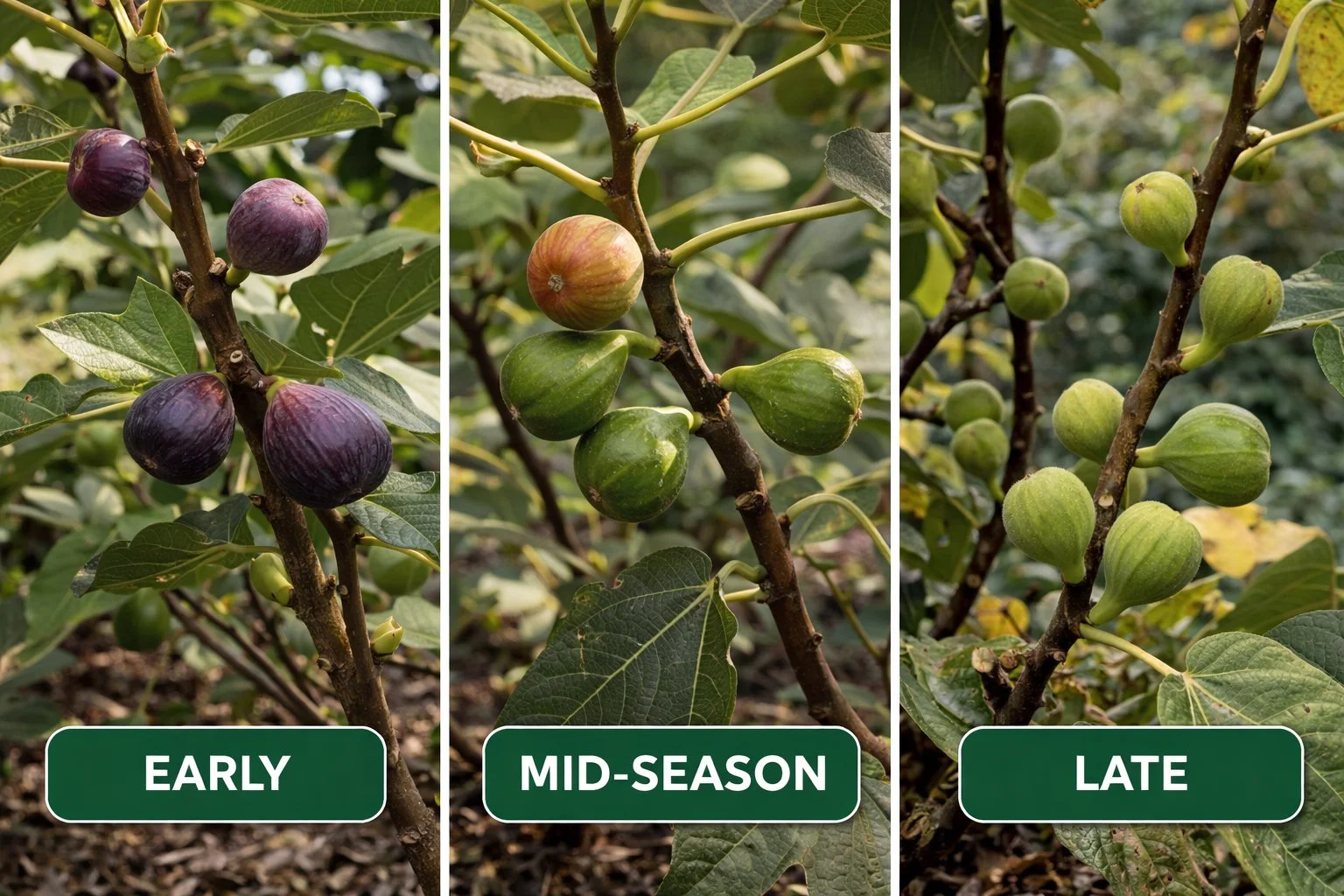
Ripening time is the quiet make-or-break factor for figs in Zone 7b. Many varieties grow vigorously and set fruit, yet still fail to deliver ripe figs before fall frost. Understanding when a fig actually finishes—not when it looks promising—helps growers choose varieties that match the season length, avoid frustration, and plan protection only where it truly pays off. This article explains how ripening windows work in Zone 7b and how to use them to your advantage.
This topic fits into the broader framework of Fig variety selection for Zone 7b, where cold tolerance, ripening windows, and long-term reliability are considered together.
Why Ripening Time Matters More Than Growth
In Zone 7b, summer heat is usually sufficient to grow figs, but the calendar is unforgiving. After winter, a fig must leaf out, extend shoots, set fruit, size up, and ripen—often within a compressed window. Varieties that ripen late may look healthy and productive yet never deliver edible fruit before the first frost.
This is why ripening time—not vigor—is the most reliable predictor of success.
Early-Ripening Figs: The Reliability Backbone
Early figs ripen in mid to late summer, often on new growth. These varieties are the most dependable in Zone 7b because they finish before fall weather becomes unpredictable. Even after winter dieback, they typically have enough time to reset and still produce a full main crop.
For growers who want consistent harvests with minimal protection, early-ripening figs form the foundation of a successful planting.
Mid-Season Figs: Reliable With the Right Conditions
Mid-season figs usually ripen in late summer to early fall. In Zone 7b, these varieties perform well when some fruiting wood is preserved or when spring growth begins early. In years with delayed leaf-out or repeated cold snaps, mid-season figs may struggle to finish without help.
These varieties often reward growers who use favorable microclimates or light winter protection.
Late-Season Figs: High Risk Without Protection
Late-season figs require long, warm seasons to ripen fully. In Zone 7b, they frequently fail unless winter protection preserves wood and accelerates spring fruiting. Without protection, these figs may set fruit repeatedly but never reach maturity.
Late figs are best reserved for growers using tunnels, wraps, or containers—or those willing to accept inconsistent harvests.
How Winter Dieback Shifts Ripening Windows
Winter dieback resets the ripening clock. When a fig loses fruiting wood, it must rebuild structure before it can set fruit. Early figs recover fastest and still ripen on time. Mid-season figs become borderline. Late figs often run out of season entirely.
This is why the same variety may succeed one year and fail the next, depending on winter severity.
Breba Crops and Ripening Timing
Some figs produce a breba crop on older wood. In Zone 7b, brebas can ripen earlier than main crops—if the wood survives winter. When it does not, breba production disappears and the tree relies solely on the main crop, pushing ripening later into the season.
Breba-producing varieties therefore benefit disproportionately from preserved wood.
Matching Ripening Time to Your Goals
Growers prioritizing reliability should focus on early figs. Those seeking better flavor or variety diversity can add mid-season figs with thoughtful placement or protection. Late figs belong only in protected systems or specialty plantings.
Choosing ripening windows intentionally creates a harvest that aligns with your climate rather than fighting it.
Takeaway
In Zone 7b, fig success depends less on how well a tree grows and more on when its fruit finishes. Early figs offer the greatest reliability, mid-season figs succeed with the right conditions, and late figs require protection to perform consistently. By choosing varieties based on realistic ripening windows, growers dramatically increase their odds of harvesting ripe figs year after year.
For a complete framework on choosing figs that actually succeed in this climate, see Fig Variety Selection for Zone 7b.
