How Much Branch Dieback Is Normal?
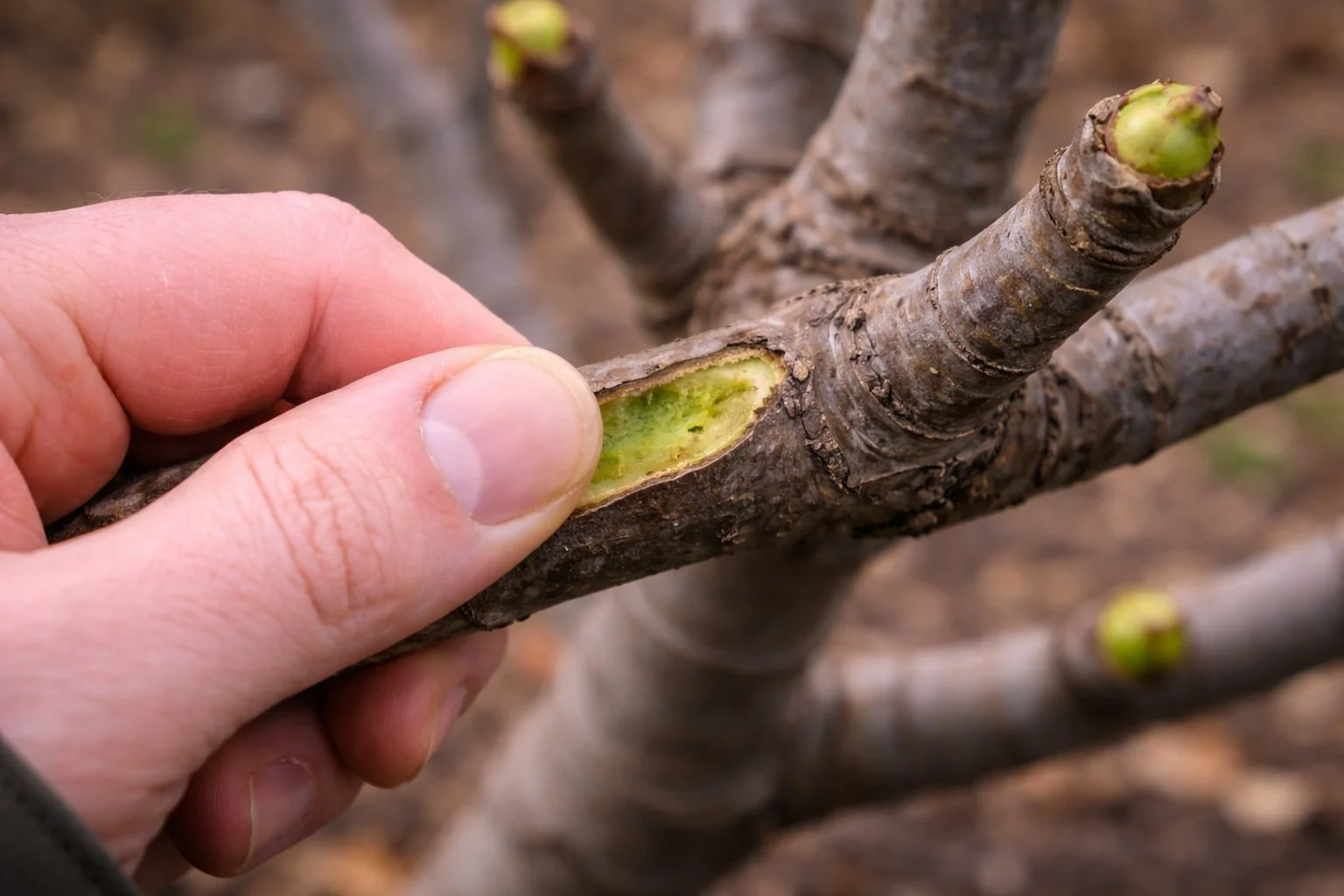
Seeing dead wood in spring can be alarming, especially after a cold winter. But some branch dieback is not only normal for fig trees — it’s expected. Knowing how much dieback is normal versus concerning helps prevent unnecessary worry and premature pruning.
This guide explains typical dieback patterns after winter, how to interpret what you’re seeing, and when action is actually needed.
Why Fig Trees Commonly Experience Dieback
Figs grow vigorously during the season, often producing late, tender wood that doesn’t fully harden before winter. That newer growth is the first to die back during cold weather.
Dieback is the tree’s way of protecting its core structure. By sacrificing vulnerable outer wood, the fig preserves energy and resources in more protected tissue.
What “Normal” Dieback Looks Like
Normal winter dieback usually affects:
The tips of branches
Late-season shoots
Uppermost growth exposed to wind and cold
In many cases, dieback of 6–24 inches on branch tips is entirely normal, even after moderate winters in Zone 7b.
Healthy wood below the dieback line will show swelling buds and green tissue beneath the bark.
Dieback Patterns That Signal Healthy Survival
Reassuring signs include:
Bud break occurring lower on the branch
Multiple new shoots emerging from older wood
Strong basal growth from the crown or root zone
These patterns indicate the tree successfully protected its vital tissues through winter.
When Dieback Is More Than Normal
Dieback becomes concerning when:
Entire branches fail to leaf out
Growth only emerges from the base
Large sections of older wood remain dormant
While figs can recover from severe dieback, these signs suggest winter protection may need adjustment.
Distinguishing Dieback from Rot or Moisture Damage
Normal dieback results in dry, brittle wood that snaps cleanly. Moisture damage produces soft, spongy wood with dark discoloration or mold.
If wood smells sour or peels easily, moisture — not cold — is usually the cause.
How Winter Severity Affects Dieback Expectations
Mild winters may produce little to no dieback on established trees. Harsh winters with repeated freeze–thaw cycles often cause deeper dieback, even when protection is used.
Tree age, variety, site exposure, and moisture conditions all influence how much wood survives.
How to Prune After Dieback
Wait until live growth clearly defines the boundary between healthy and dead wood. Prune just above living buds or branches once growth is active.
Avoid cutting aggressively early in spring — figs often surprise growers with late-emerging buds.
Using Dieback as Feedback
Dieback is not a failure — it’s information. Patterns of dieback reveal whether protection timing, materials, or moisture management need refinement.
Over time, adjusting winter strategies based on observed dieback leads to stronger trees and more predictable spring growth.
Field Observations — Giles County, Tennessee (Zone 7b)
Expectations regarding branch dieback described in this article are informed by in-ground orchard observation in Pulaski, Tennessee, USDA Zone 7b. In this climate, winter injury does not follow a uniform pattern. Some seasons result in minimal tip damage, while others produce partial scaffold dieback depending on cold duration, freeze–thaw fluctuation, and pre-winter shoot maturity.
Observed recovery patterns emphasize that moderate dieback is often consistent with long-term orchard viability when root systems remain intact and spring regrowth emerges from viable lower nodes. Multi-season monitoring demonstrates that structural resilience and regrowth timing are more predictive of productivity than the extent of visible winter damage immediately following cold events.
These expectations are grounded in cold-edge southeastern orchard conditions rather than mild coastal growing environments.
The Takeaway
Some branch dieback is a normal part of fig winter survival. Understanding what’s expected — and what’s not — allows growers to respond calmly, prune wisely, and improve winter protection strategies year after year. For a complete overview of cold-weather strategies, materials, and recovery techniques, see Winter Protection & Dieback Prevention for Fig Trees.
