How to Check Fig Trees for Freeze Damage in Spring
Spring is when winter damage finally reveals itself — but checking too early or too aggressively can cause more harm than good. Fig trees often leaf out unevenly, and what looks dead in early spring may simply be slow to wake.
This guide explains how to check fig trees for freeze damage in spring, what signs matter, what to ignore, and when it’s safe to take corrective action.
Why Patience Matters in Spring
Fig trees respond slowly after cold winters, especially when branches experienced temperature stress. Buds may swell weeks apart, and lower wood often wakes later than upper branches.
Premature pruning or scraping can remove living tissue and reduce recovery potential.
When to Start Checking for Damage
Begin assessing freeze damage only after:
Nighttime temperatures consistently stay above freezing
Bud swell has begun on at least part of the tree
Nearby fig trees or known survivors show growth
In Zone 7b, this often means waiting until mid to late spring rather than early March.
Visual Signs of Freeze Damage
Start with simple observation. Damaged wood often shows:
Darkened or shriveled bark
Cracked or peeling outer layers
No bud swelling while adjacent areas show growth
However, appearance alone can be misleading — especially after wet winters.
The Scratch Test (Used Carefully)
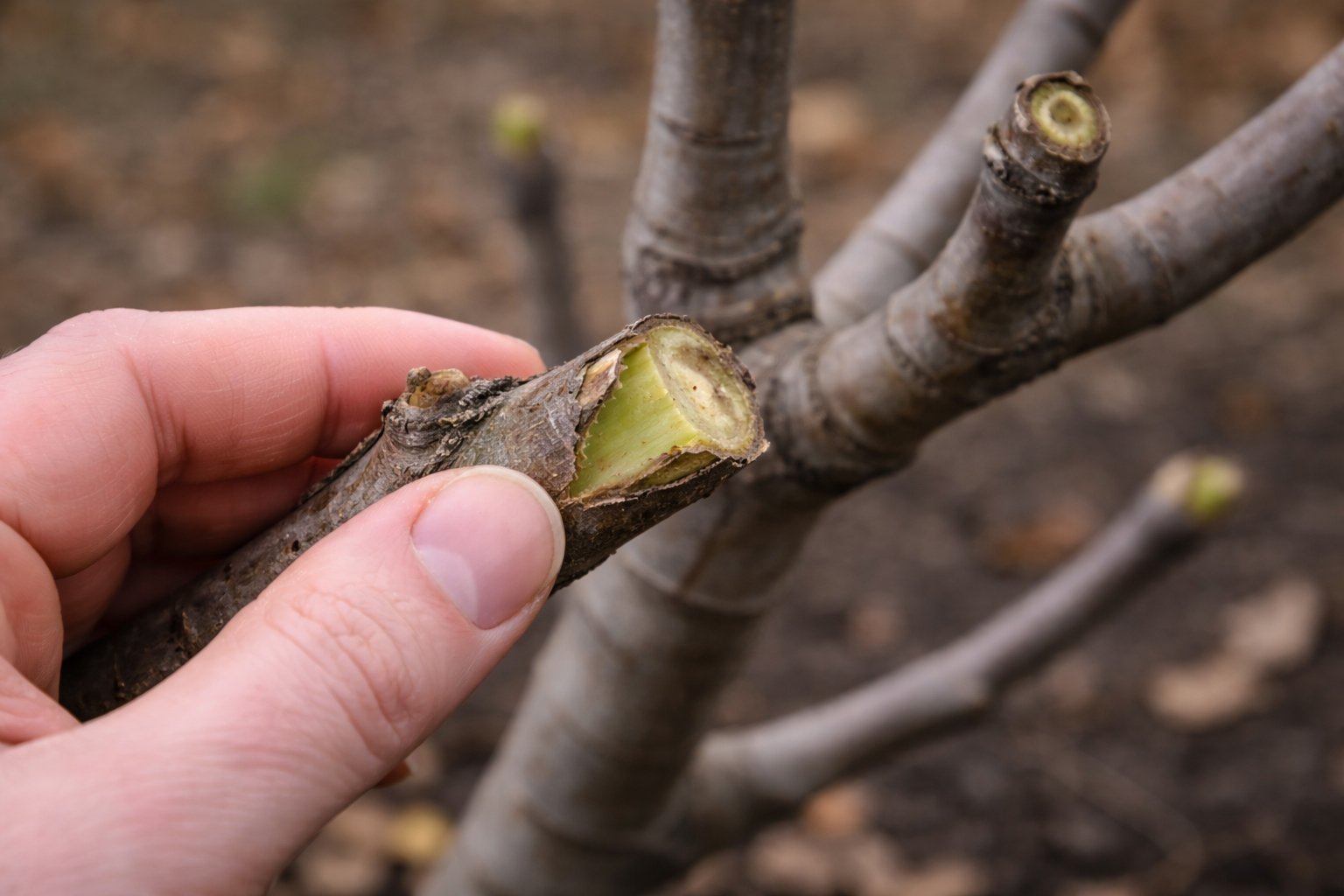
The scratch test can help confirm damage, but it should be used sparingly. Lightly scrape a small section of bark with a fingernail or knife.
Green, moist tissue underneath indicates living wood
Brown, dry tissue suggests dieback
Avoid repeated scraping along branches, which creates unnecessary wounds.
Bud Behavior Tells the Real Story
Healthy buds swell and push growth as temperatures rise. Buds that remain dry, brittle, or collapse without opening often indicate dead wood.
Watch for growth emerging from lower branches or the base of the plant — this usually signals root survival even if upper wood was lost.
Why Some Damage Appears Later
Some freeze damage isn’t immediately visible. Branches may leaf out partially, then stall or collapse weeks later.
This delayed failure often results from internal tissue damage that worsens as sap flow increases.
When to Prune Freeze-Damaged Wood
Prune only after live growth clearly defines the boundary between healthy and dead wood. Cutting too early risks removing viable tissue.
Make clean cuts just above live buds or where healthy wood begins.
Don’t Confuse Moisture Damage with Freeze Damage
Rot and mold from winter moisture problems often look like freeze injury. Soft, spongy wood or foul odors point to moisture-related damage rather than cold kill.
Understanding the cause helps prevent repeat issues next winter.
Field Observations — Giles County, Tennessee (Zone 7b)
Freeze damage assessment described in this article is informed by in-ground orchard observation in Pulaski, Tennessee, USDA Zone 7b. Spring evaluation occurs following variable winter exposure, including intermittent sub-15°F cold events and freeze–thaw cycles that affect bud viability and upper scaffold integrity.
Assessment is based not only on visible bark injury or darkened cambium, but on delayed bud break patterns, lower-node activation, and overall structural recovery during early spring growth. Multi-season observation demonstrates that initial visual damage can overestimate permanent loss, particularly in cold-edge climates where regrowth potential remains strong below visibly affected tissue.
These evaluation principles reflect southeastern orchard conditions rather than controlled or consistently mild winter environments.
The Takeaway
Checking fig trees for freeze damage in spring requires patience, observation, and restraint. Let the tree show you what survived before taking action, and recovery will be stronger and more predictable.
For a complete overview of cold-weather strategies, materials, and recovery techniques, see Winter Protection & Dieback Prevention for Fig Trees.
