Winter Moisture Problems: Preventing Mold, Rot, and Wetness
In many winters, moisture causes more damage to fig trees than cold itself. Trapped humidity, condensation, and prolonged wetness can soften bark, encourage mold growth, and lead to rot that becomes visible only in spring.
This article explains why winter moisture is so dangerous for figs, how common protection methods accidentally create wet conditions, and how to keep trees dry while still insulated.
Why Moisture Is a Bigger Threat Than Cold
Dormant fig wood tolerates cold surprisingly well, but it does not tolerate prolonged wetness. When moisture is trapped against branches, bark softens and becomes vulnerable to fungal growth and decay.
Repeated freeze–thaw cycles make this worse by drawing moisture into small cracks in the bark, expanding damage over time.
How Winter Protection Traps Moisture
Many well-intentioned protection systems fail because they seal rather than breathe. Plastic wraps, tightly bound insulation, and dense materials block airflow and trap condensation.
Warm daytime temperatures combined with insulation create internal humidity that cannot escape, especially during mild winters or rain events.
Signs of Moisture Damage in Spring
Moisture damage often masquerades as freeze injury. Common signs include:
Soft or spongy bark
Darkened or moldy patches
Foul odor when insulation is removed
Wood that peels or collapses instead of snapping cleanly
These symptoms usually indicate rot rather than cold kill.
Designing Moisture-Safe Protection Systems
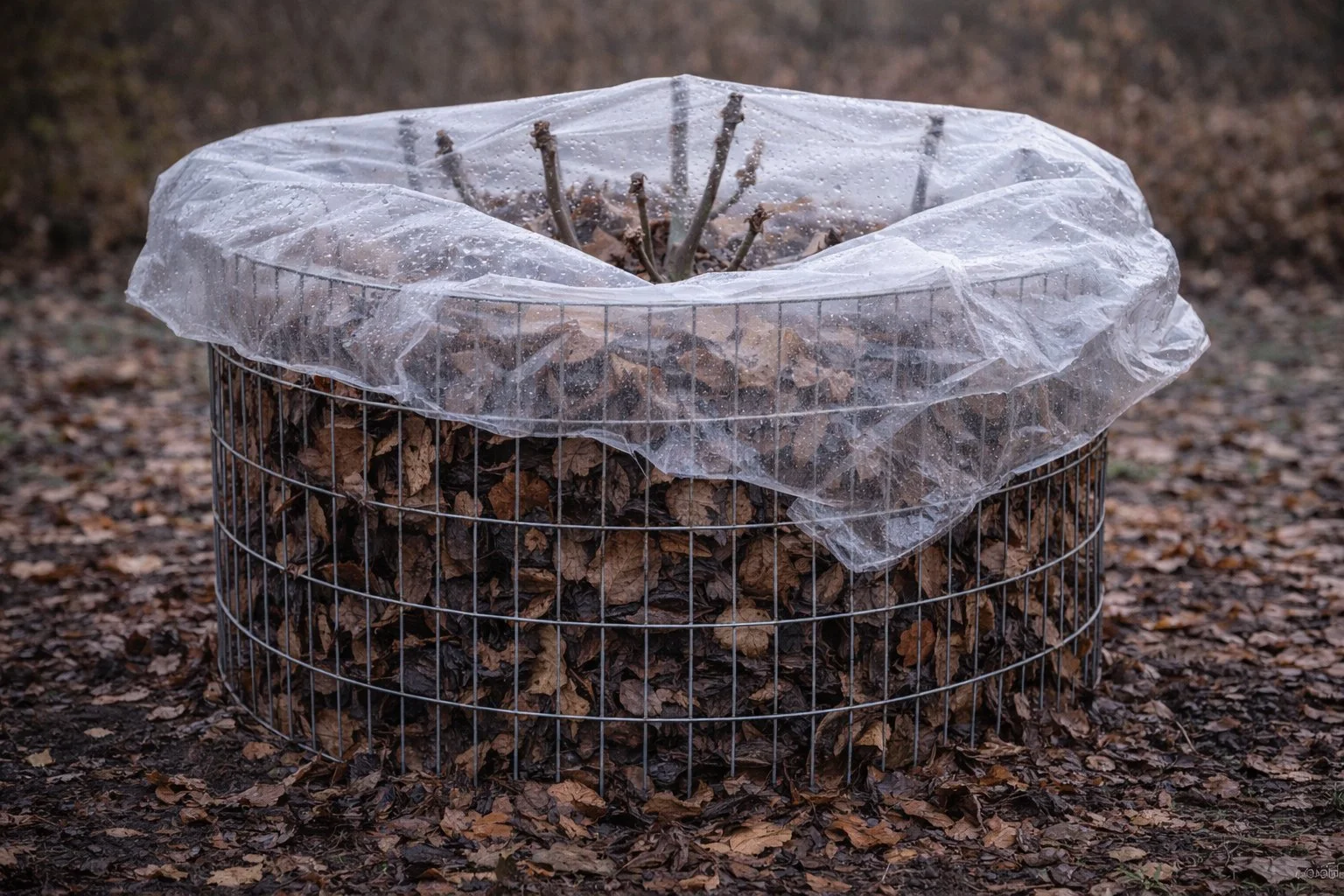
Effective winter protection systems are breathable and layered. Dry leaves, straw used sparingly, and open wire cages allow moisture to escape while still insulating.
Outer layers should block wind but never seal the system. The bottom of protection systems should remain open for drainage and airflow.
Why Plastic Causes So Many Problems
Plastic sheeting blocks rain but also blocks evaporation. When used directly against branches, it creates condensation that stays trapped for weeks or months.
If plastic is used at all, it should be placed well outside the insulation layer and vented to allow airflow.
Ground Conditions Matter Too
Poor drainage around the base of fig trees increases winter moisture problems. Standing water, compacted soil, and heavy clay hold moisture that rises into protection systems.
Improving drainage and avoiding overwatering in fall reduces moisture-related damage significantly.
Managing Moisture in Mild Winters
Mild winters are especially risky for moisture buildup. Warm spells followed by rain create ideal conditions for condensation inside wrapped systems.
In these conditions, minimal protection or partial venting often outperforms heavy insulation.
Field Observations — Giles County, Tennessee (Zone 7b)
Winter moisture considerations described in this article are informed by in-ground orchard observation in Pulaski, Tennessee, USDA Zone 7b. In this humid southeastern climate, winter protection strategies that trap excess moisture can create secondary stress unrelated to cold exposure alone. Extended wetness within insulated enclosures, fluctuating freeze–thaw cycles, and limited airflow contribute to bark softening, mold development, and structural weakening.
Observations across multiple winter cycles indicate that protection methods must balance insulation with ventilation and moisture control. Root-zone saturation and trunk-level dampness are monitored alongside temperature exposure to determine long-term structural health and spring recovery consistency.
These conclusions reflect humid cold-edge orchard conditions rather than dry-winter climates where moisture accumulation is less influential.
The Takeaway
Successful winter fig protection depends on keeping trees dry as much as keeping them insulated. Breathable materials, good drainage, and restraint prevent mold and rot far more effectively than airtight wrapping.
For a complete overview of cold-weather strategies, materials, and recovery techniques, see Winter Protection & Dieback Prevention for Fig Trees.
