Overwintering Container Fig Trees in Cold Climates (Zone 7b)
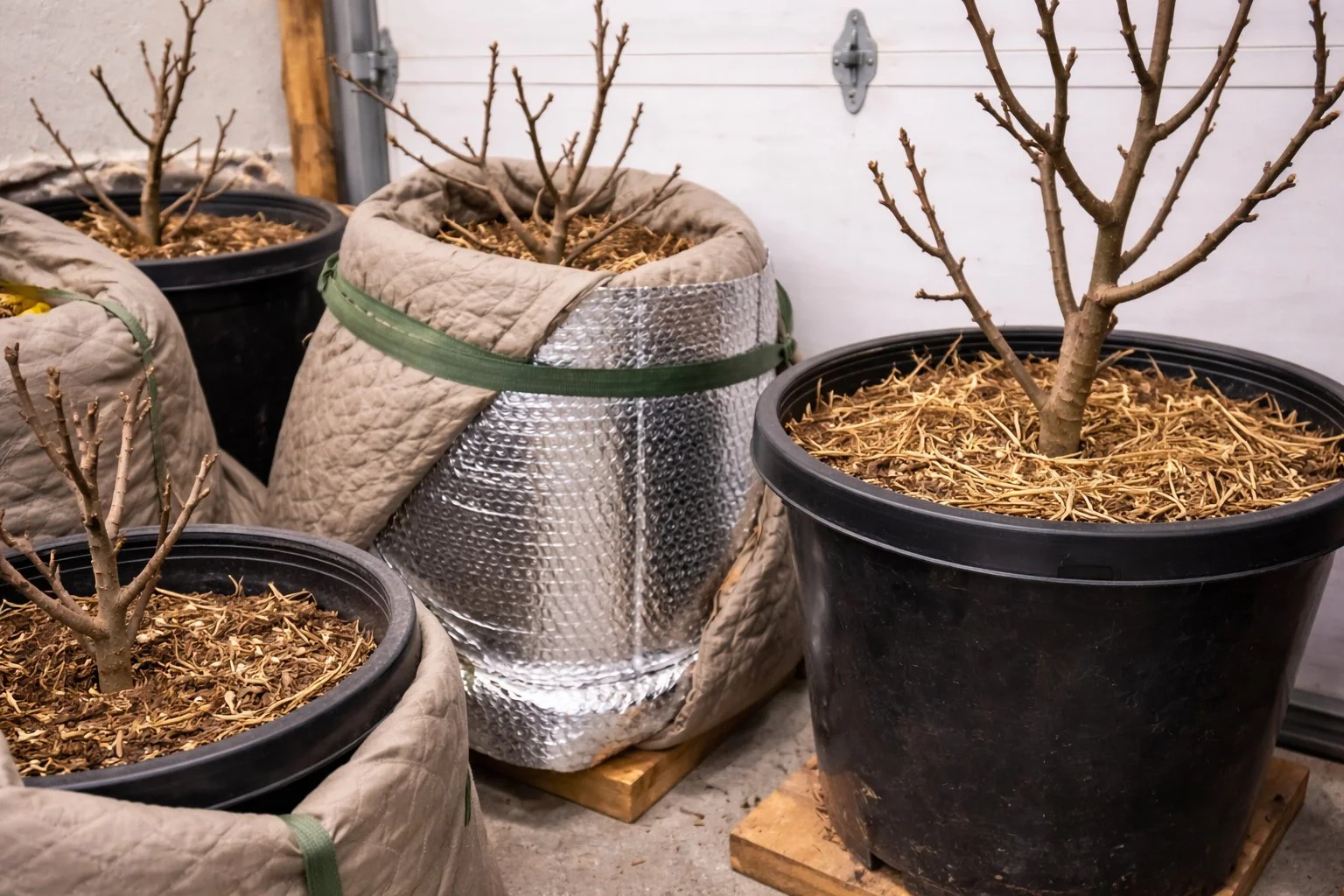
For growers in cold climates, overwintering is the defining challenge of container fig culture. While figs are resilient trees, their fruiting potential depends heavily on the survival of above-ground wood from one season to the next. In Zone 7b, winter conditions often sit at the threshold where unprotected figs survive inconsistently, making intentional overwintering practices essential.
Container-grown figs offer an advantage in this regard. Their mobility allows growers to manage exposure to cold, moisture, and temperature fluctuations in ways that are not possible with in-ground trees. The goal of overwintering is not to keep the tree warm, but to keep it stable.
Understanding Dormancy in Container Figs
Figs enter dormancy in response to shortening day length and declining temperatures. Once dormant, they tolerate cold far better than when actively growing. Problems arise when container figs experience repeated freeze–thaw cycles or prolonged exposure to cold, saturated soil while roots are inactive.
Successful overwintering respects dormancy rather than trying to delay or reverse it. Forcing warmth or light during winter often leads to weak, etiolated growth that exhausts stored energy and increases vulnerability to damage.
Choosing the Right Winter Location
The ideal overwintering location is cold, dark, and stable. Unheated garages, crawlspaces, sheds, or protected outdoor areas often provide the right balance. Temperatures that remain just above freezing minimize metabolic activity while avoiding deep soil freezing that can damage roots.
Living spaces and heated basements are usually too warm. They encourage premature growth and increase water demand at a time when roots cannot function efficiently. Stability matters more than precision; wide temperature swings cause more harm than steady cold.
Moisture Management During Dormancy
Water needs drop dramatically once figs are dormant, but they do not disappear entirely. Container soil should remain slightly moist, not dry and not saturated. Completely dry soil can desiccate fine roots, while excess moisture promotes rot in cold conditions.
Checking soil periodically and watering sparingly maintains root health without disrupting dormancy. Because evaporation is minimal in winter, small amounts of water go a long way.
Outdoor Overwintering in Containers
In some cases, container figs can be overwintered outdoors with protection. This approach relies on shielding roots from extreme cold and preventing water accumulation in the pot. Insulating containers, grouping pots together, and placing them in sheltered microclimates reduce exposure.
Outdoor overwintering carries greater risk in Zone 7b and requires careful site selection and monitoring. It is most successful with cold-hardy varieties and larger containers that moderate temperature swings.
Timing the Transition In and Out
Moving container figs too early into winter storage can prolong dormancy unnecessarily, while moving them too late risks freeze damage. Allowing trees to experience natural cooling before storage improves cold tolerance and hardiness.
In spring, patience is equally important. Bringing figs out of storage during brief warm spells can expose tender growth to late frosts. Waiting until consistent warming occurs reduces stress and preserves developing buds.
Preserving Fruiting Wood
The primary benefit of controlled overwintering is the preservation of fruiting wood. By minimizing dieback, container figs enter the growing season with established structure and mature buds, leading to earlier and more reliable harvests.
This advantage compounds over time. Trees that retain wood year after year become more productive and easier to manage than those forced to regrow from the base each spring.
Overwintering as a Long-Term Strategy
Overwintering container figs is not a single technique but a system that integrates location, moisture management, timing, and restraint. Each winter provides feedback that helps refine the approach.
When overwintering is done well, container figs transition smoothly into spring with minimal stress, setting the stage for healthy growth and fruiting in the months ahead.
For a complete, season-by-season framework that ties soil, watering, pruning, winter protection, and variety choice together, see Growing Fig Trees in Containers.
