Fig Farm Practice Supporting Articles.
Professional guides to growing figs in Zone 7b
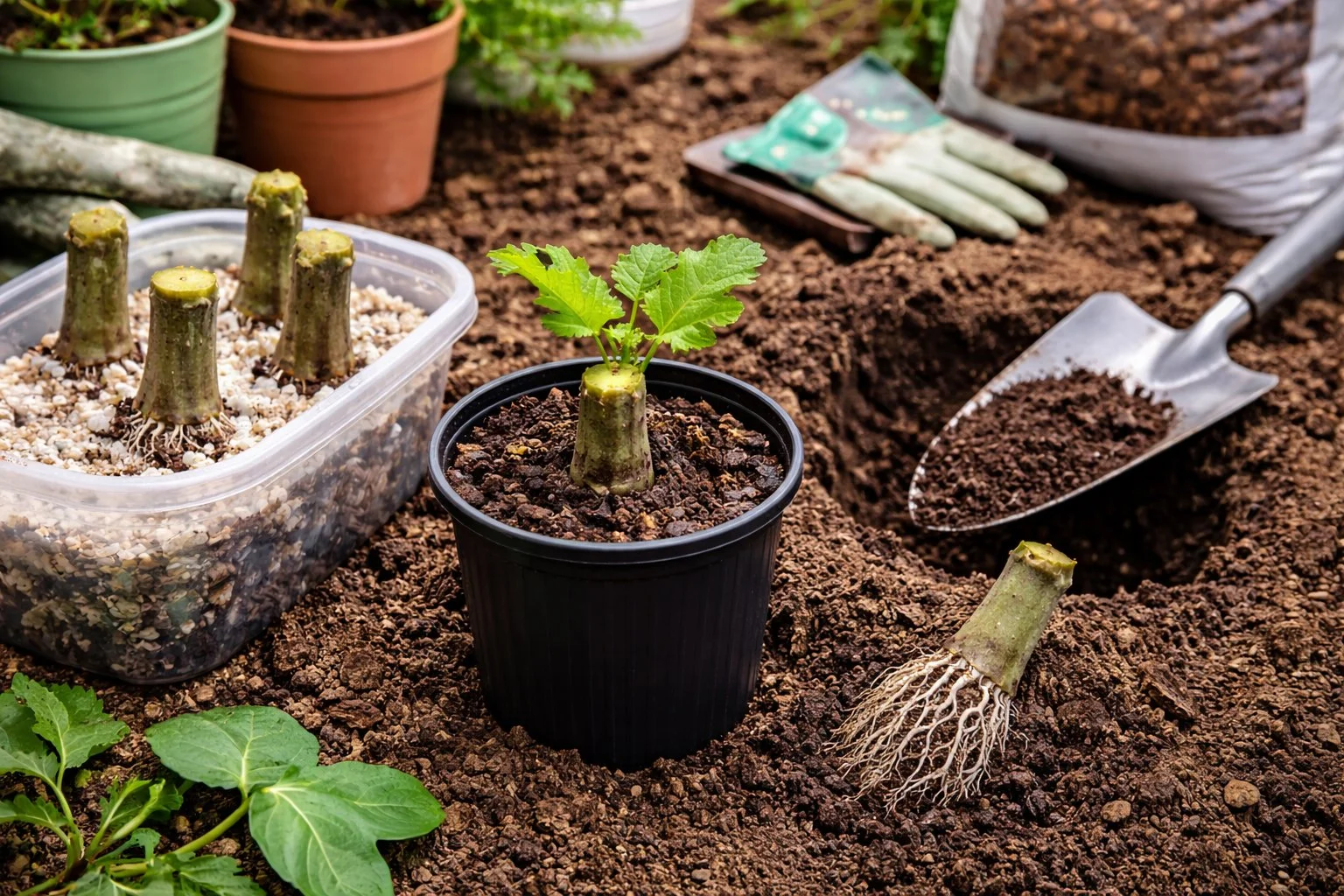
Transitioning Rooted Fig Cuttings to Pots or the Ground
Rooted fig cuttings are gradually transitioned from propagation media into pots or garden soil to allow roots to adjust before active growth resumes.
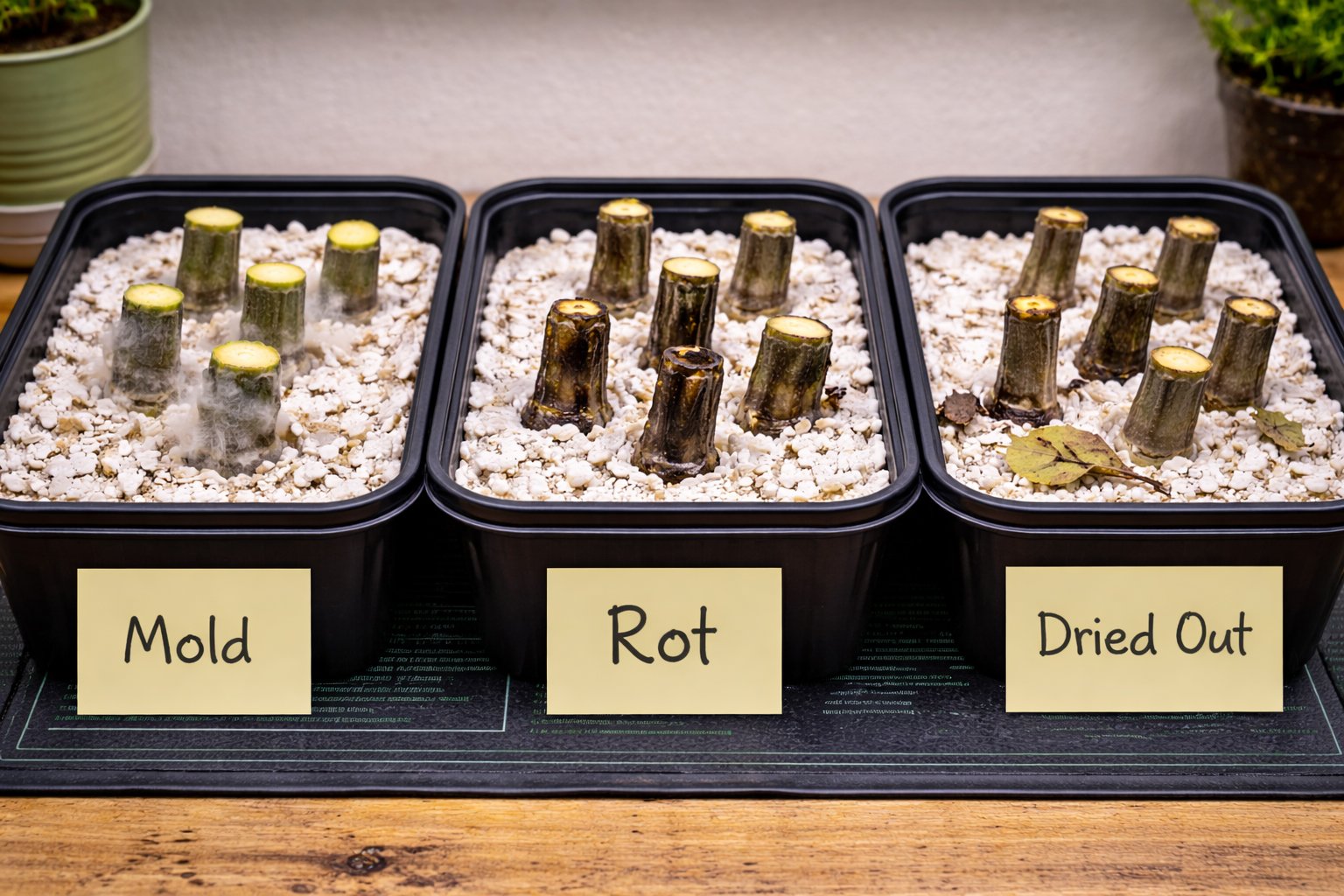
Common Fig Propagation Failures and How to Avoid Them
Propagation failures such as mold, rot, and drying are usually caused by excess moisture, poor airflow, or inconsistent humidity during rooting.
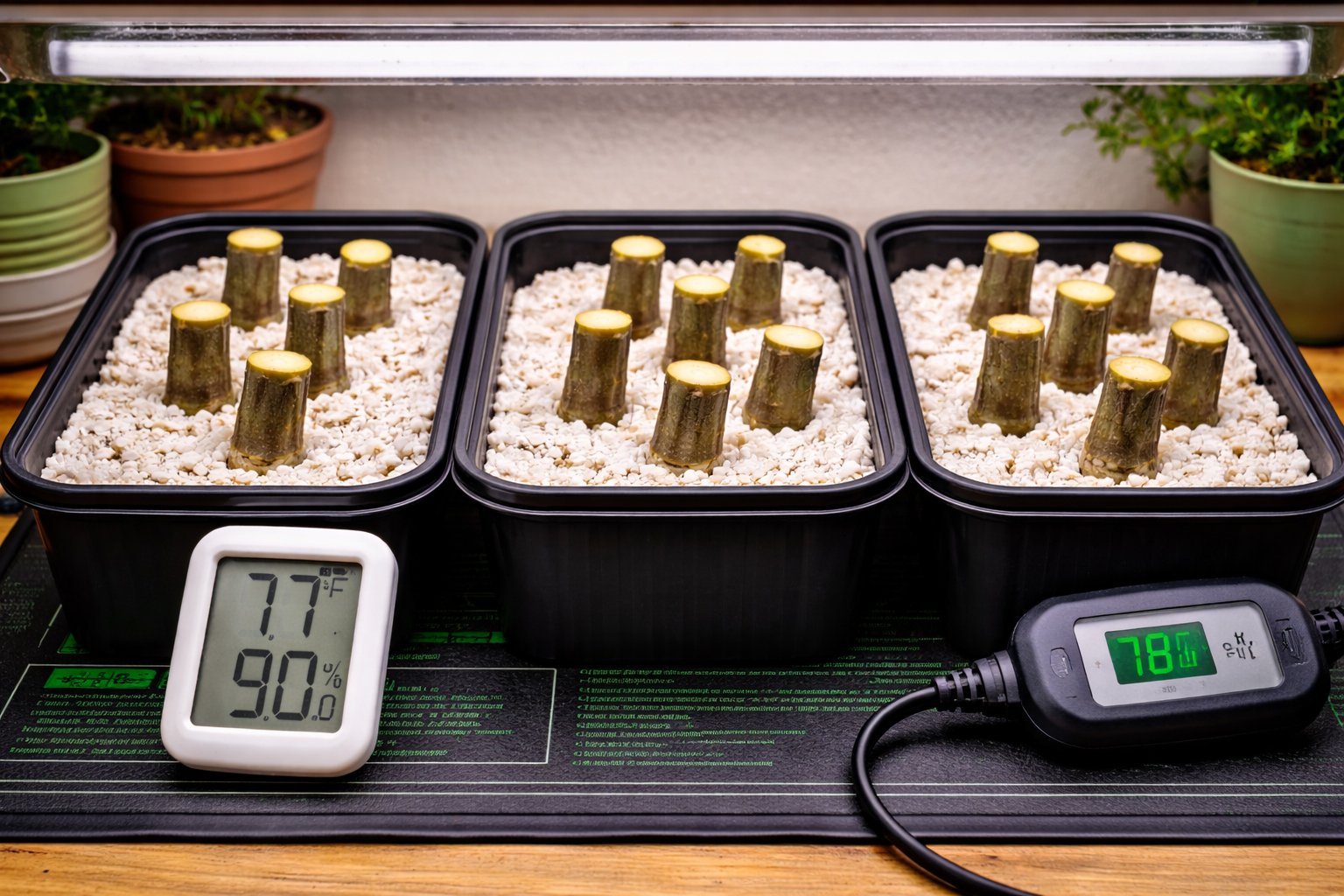
Heat Mats, Light, and Temperature for Rooting Success
Stable warmth from a heat mat combined with gentle indoor light helps fig cuttings root more consistently by supporting early root formation before top growth.
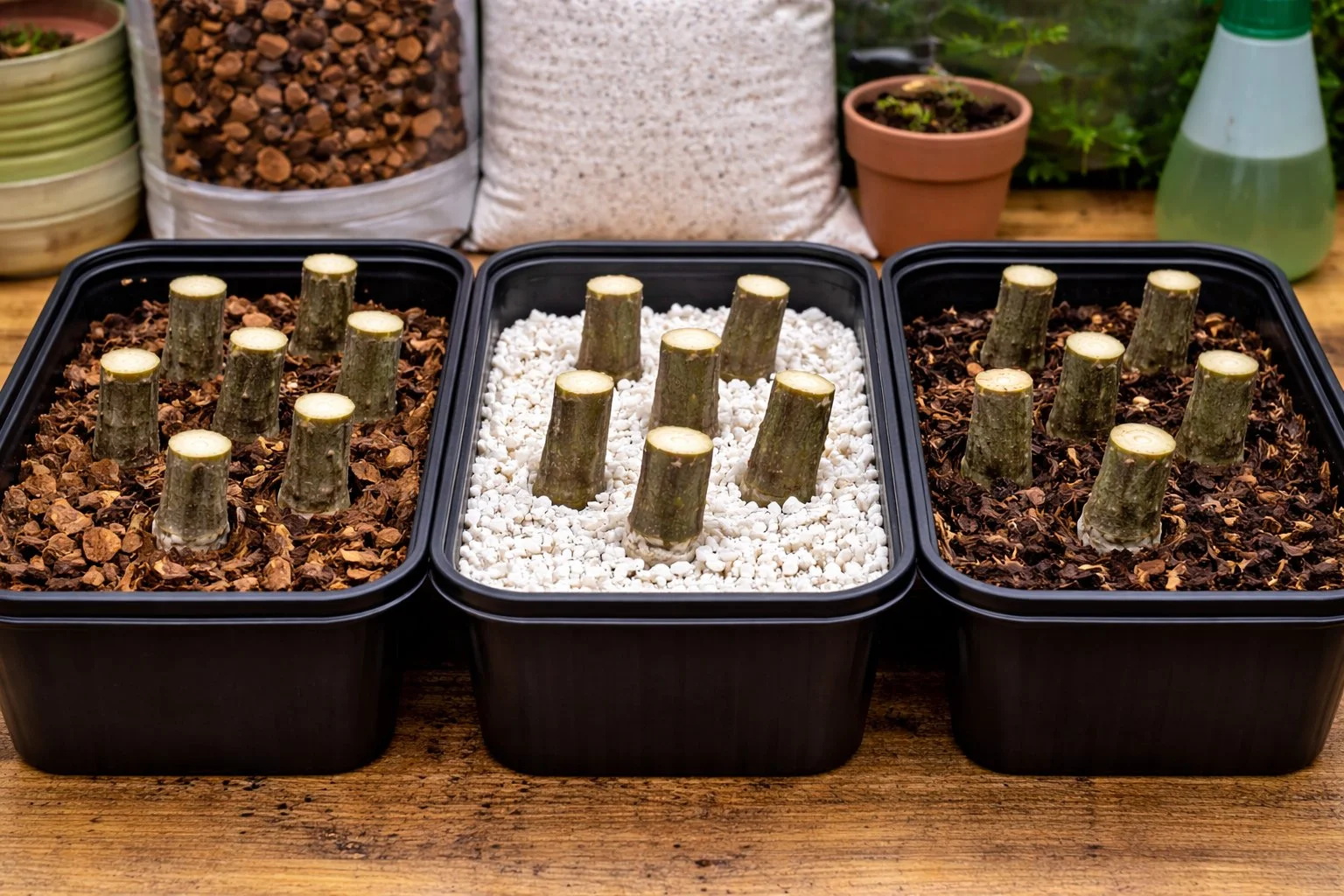
Rooting Media for Figs: Bark Mixes vs Perlite vs Soil
Different rooting media—including bark-based mixes, perlite, and soil—offer varying drainage and moisture characteristics that influence how fig cuttings form roots.
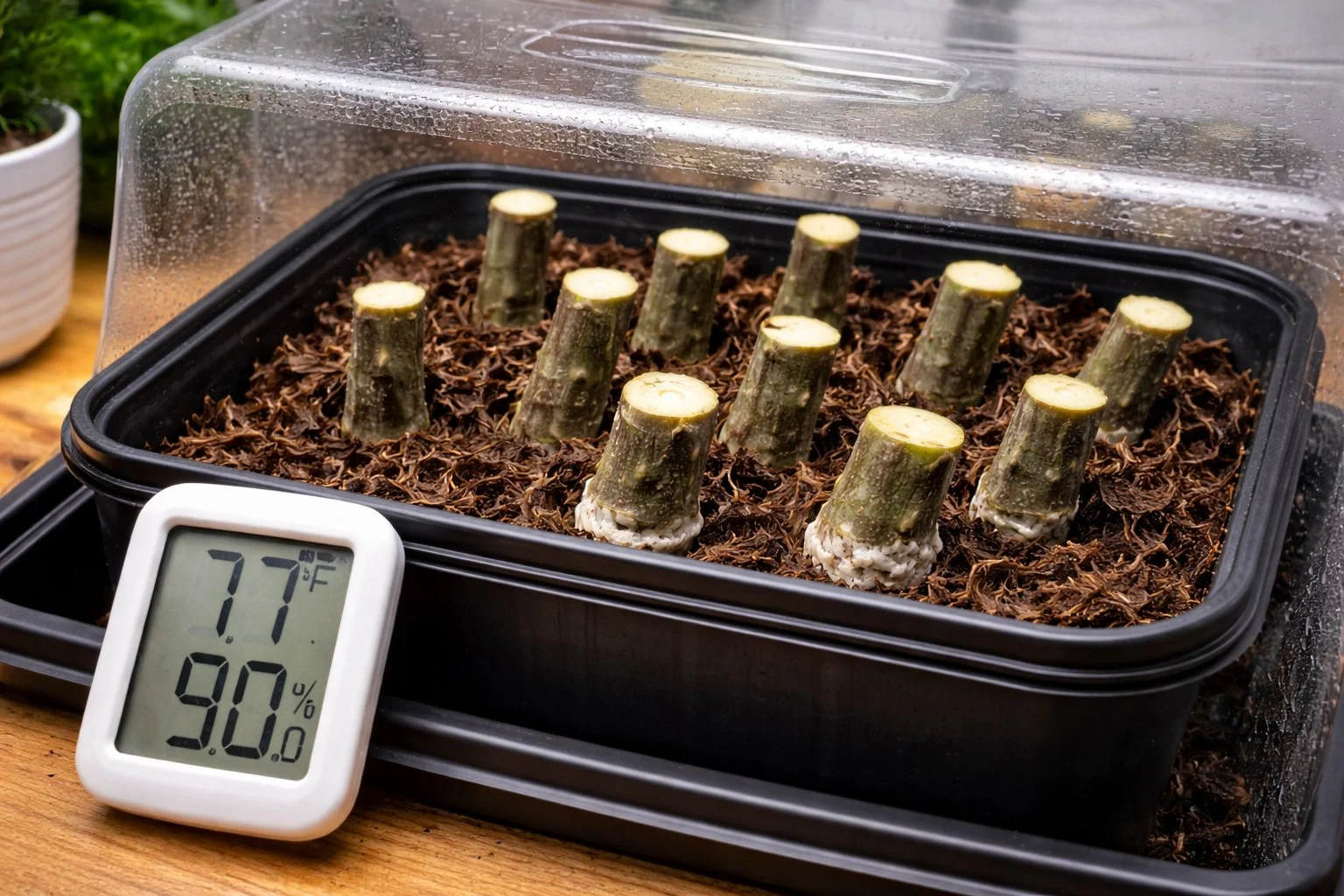
Callusing Fig Cuttings: Methods, Timing, and Mistakes
Fig cuttings can be callused indoors by placing them upright in a lightly moist medium and maintaining warm, stable conditions before rooting begins.
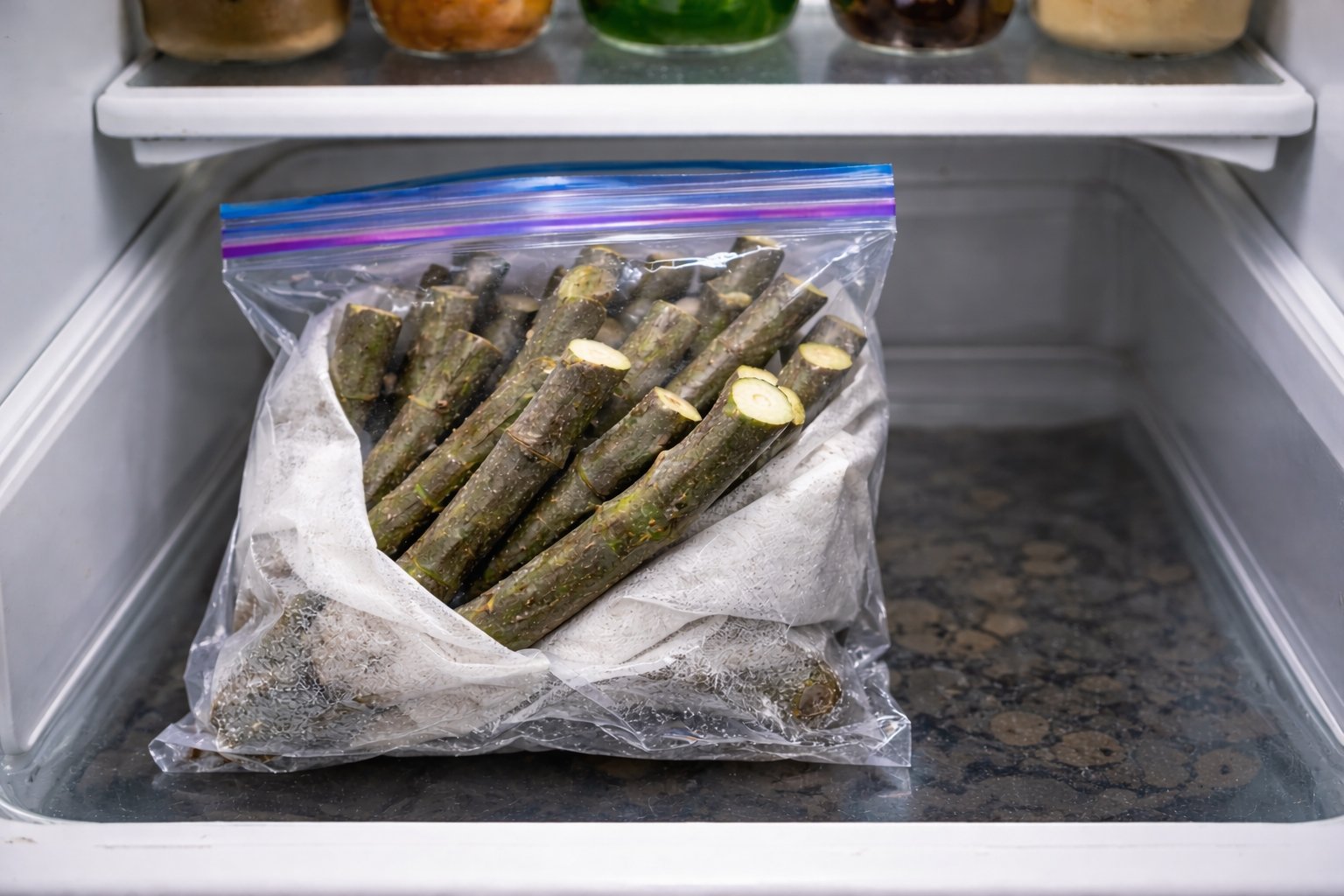
Storing Fig Cuttings Over Winter: Cold Storage vs Callus
Dormant fig cuttings can be safely stored over winter in a refrigerator using a sealed plastic bag and light moisture to prevent drying while maintaining dormancy.
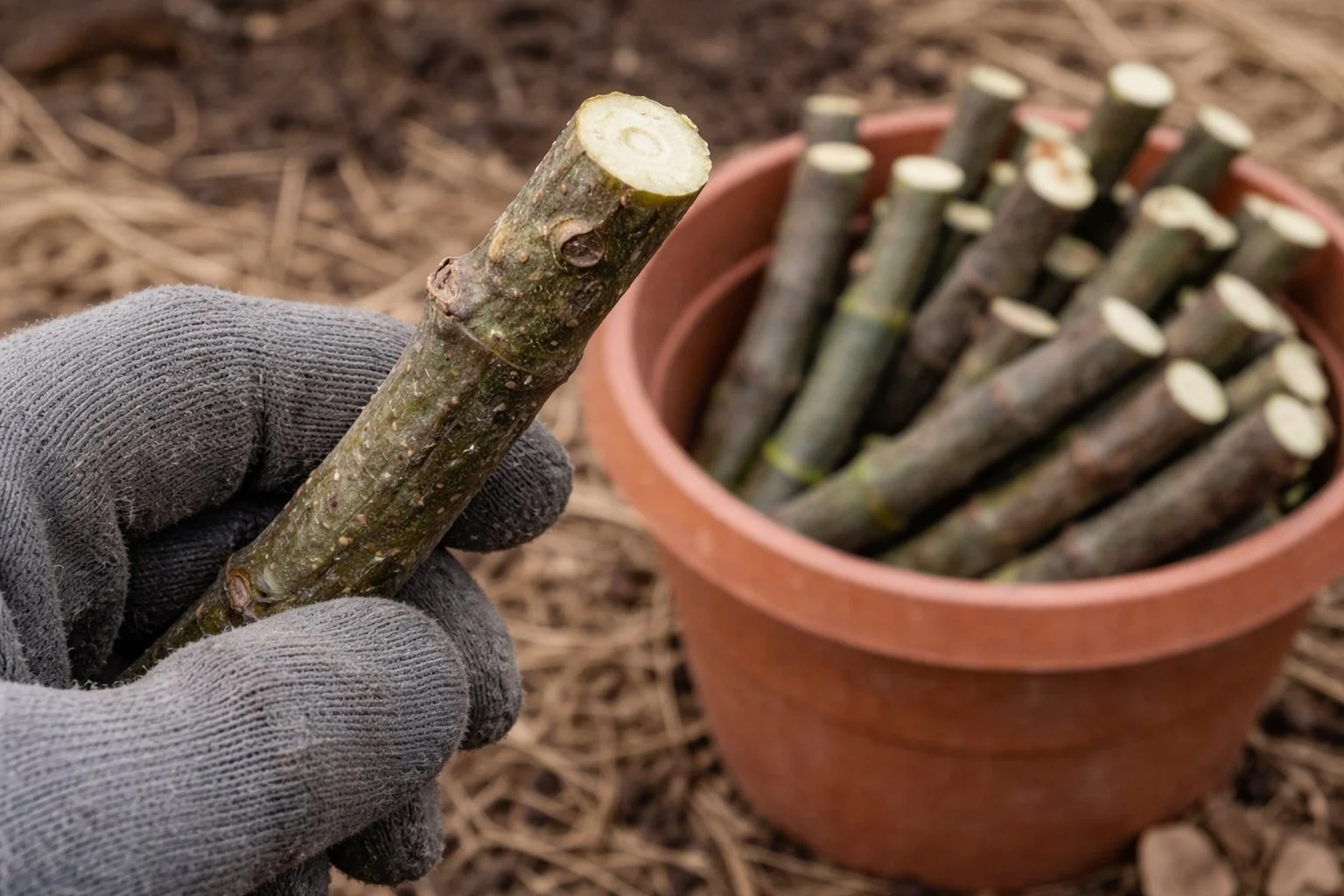
Selecting Healthy Wood: What Makes a Good Fig Cutting
A healthy fig cutting has firm bark, visible nodes, and clean white interior wood—key indicators of viable material for successful propagation.
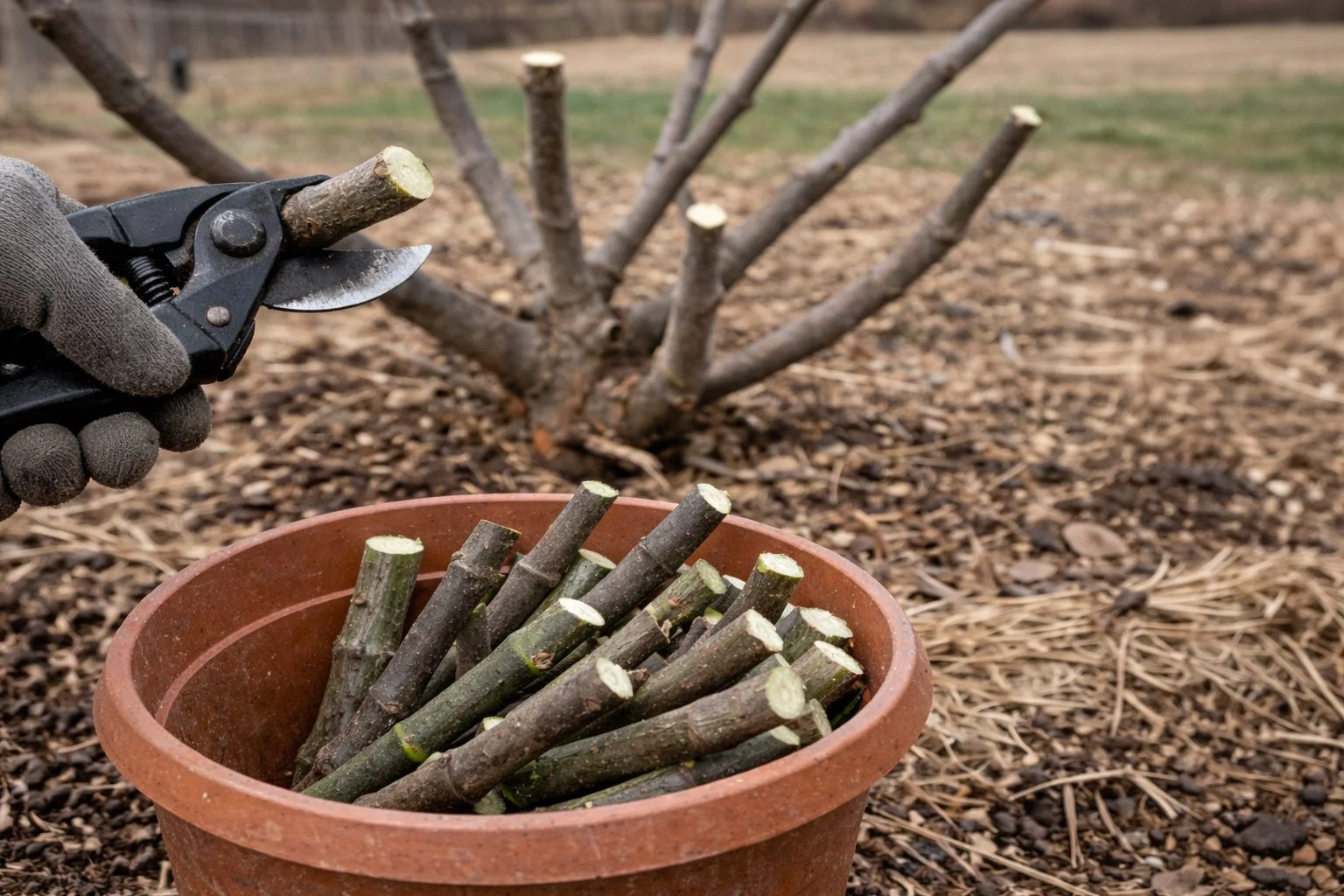
When to Take Fig Cuttings in Zone 7b
Dormant fig cuttings taken in late winter show clean, healthy wood ready for storage or propagation in Zone 7b conditions.